- English
- Español
- Português
- русский
- Français
- 日本語
- Deutsch
- tiếng Việt
- Italiano
- Nederlands
- ภาษาไทย
- Polski
- 한국어
- Svenska
- magyar
- Malay
- বাংলা ভাষার
- Dansk
- Suomi
- हिन्दी
- Pilipino
- Türkçe
- Gaeilge
- العربية
- Indonesia
- Norsk
- تمل
- český
- ελληνικά
- український
- Javanese
- فارسی
- தமிழ்
- తెలుగు
- नेपाली
- Burmese
- български
- ລາວ
- Latine
- Қазақша
- Euskal
- Azərbaycan
- Slovenský jazyk
- Македонски
- Lietuvos
- Eesti Keel
- Română
- Slovenski
- मराठी
- Srpski језик

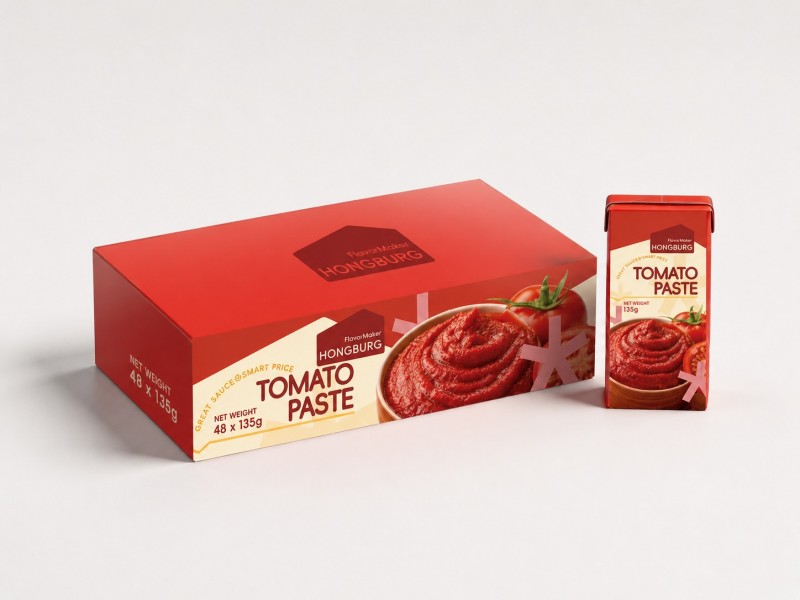
Tomato Paste in Tetra Pak
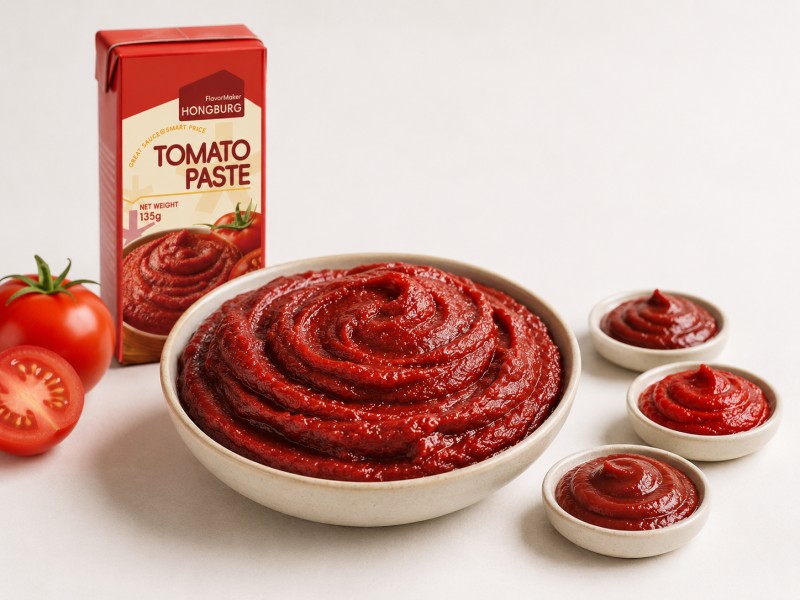
Hongburg Tomato Paste in Tetra Pak is a shelf-stable tomato paste solution for bulk, wholesale, OEM and private label buyers seeking high-quality, ready-to-use paste for sauces, pasta, pizza bases, and processed foods. Aseptic Tetra Pak packaging maintains deep tomato flavor and consistency across batches. Its concentrated formula provides a strong tomato base while ensuring ease of storage and transport.
Send Inquiry
Product Description
Carton Packaging for Shelf-Stable Tomato Paste Supply
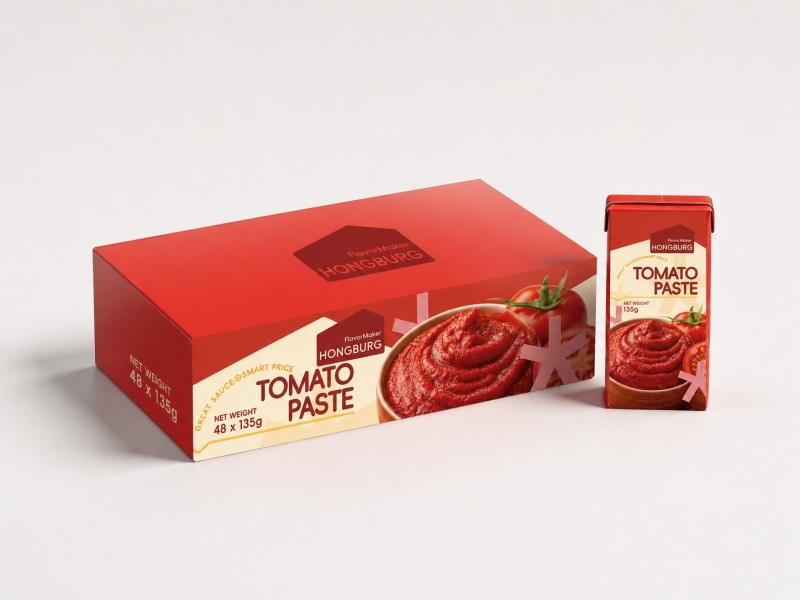
Hongburg supplies Tomato Paste in Tetra Pak for buyers who need a carton-based packaging format that supports shelf-stable distribution, retail presentation and channel efficiency. Compared with some rigid packaging formats, aseptic carton packaging can offer a clean, lightweight and practical option for tomato paste products used in both consumer and institutional channels.
For importers, supermarket suppliers, foodservice distributors and private label buyers, carton-packed tomato paste can work as a convenient format for markets where buyers prefer easy storage, clear shelf positioning and stable packaged food supply. Tetra Pak, carton pack, brick carton and shelf-stable carton formats can help buyers build tomato paste products that fit modern retail and distribution requirements.
Product Information Snapshot
| Item | Description |
| Product Name | Tomato Paste in Tetra Pak |
| Product Category | Concentrated tomato paste |
| Packaging Family | Tetra Pak / Aseptic carton packaging |
| Included Carton Forms | Aseptic Carton / Carton Pack / Brick Carton / Shelf-stable Carton |
| Main Use | Cooking base, sauce base, retail carton pack, institutional ingredient |
| Channel Fit | Retail, institutional catering, distribution, foodservice, private label |
| Packaging Value | Lightweight carton format for shelf-stable supply |
| Specification Scope | Brix, viscosity, color, texture, carton size, label language |
| Supply Mode | Export supply / Bulk / Wholesale / OEM / Private Label |
| Sample Policy | Samples available, freight usually paid by customer |
| Certifications | ISO22000 / ISO9001 / HACCP / FDA / HALAL |
Why Aseptic Carton Formats Matter for Distribution
Carton packaging is often selected when buyers need a balance between product protection, storage convenience and channel presentation. For tomato paste, an aseptic carton or shelf-stable carton format may be suitable for buyers who want an alternative to tin can, glass jar, plastic bottle or pouch packaging.
A brick carton tomato paste format can be useful for retail shelves, institutional kitchens and distributor inventories where pack shape, carton handling and storage planning matter. For some buyers, tomato paste in carton also supports a cleaner and more modern packaging image, especially for private label programs or markets where carton-packed food products are familiar to consumers.
This format does not replace every other packaging type. Instead, it gives buyers another option when they need tomato paste in a lightweight, shelf-stable and channel-ready carton pack.
Retail, Institutional and Private Label Channel Fit
For retail buyers, carton-packed tomato paste can be positioned as a practical cooking ingredient for home kitchens. Consumers may use it for pasta sauces, stews, soups, pizza bases, marinades and other tomato-based recipes. The carton format can help create a simple and organized shelf presence.
For institutional and foodservice buyers, Tetra Pak tomato paste may support kitchens that need tomato paste in a manageable carton size rather than only large cans or rigid containers. For distributors, carton packs can also support easier stock planning when serving different customer groups.
For example, a supermarket supplier may use Tomato Paste in Tetra Pak as part of a cooking sauce or tomato ingredient range, while an institutional foodservice buyer may prefer carton packs for regular kitchen use. The same tomato paste concept can then be adapted through carton size, Brix, viscosity and label design.
When Buyers Choose Carton Packs Instead of Other Formats
Different packaging formats serve different buying needs. Pouch formats such as sachets, stand-up pouches and spout pouches are useful when flexibility or portion control is important. Glass jar or bottle packaging can support retail visibility. Can formats such as tin can or metal can packaging are familiar for traditional export and foodservice channels. Plastic bottle or bucket formats may fit squeeze use, larger kitchen handling or foodservice supply.
Carton packaging stands out when buyers value shelf-stable carton presentation, lighter handling and a neat pack shape for storage or retail display. This makes carton-packed tomato paste especially relevant for buyers planning retail products, institutional supply or private label carton packaging.
Packaging Options & Custom Support
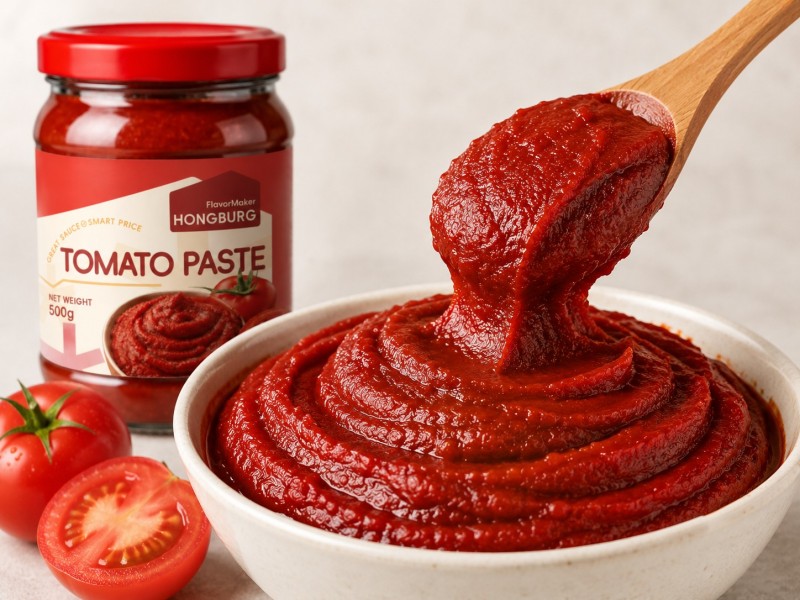
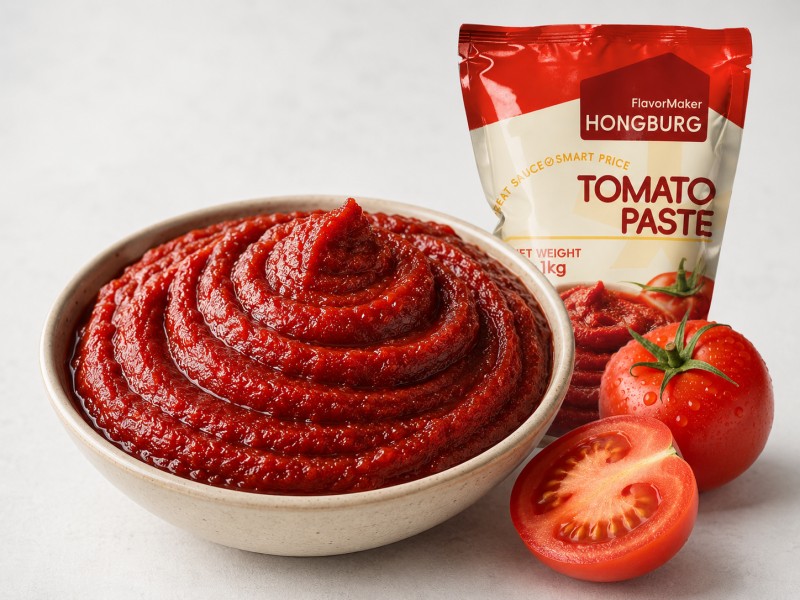
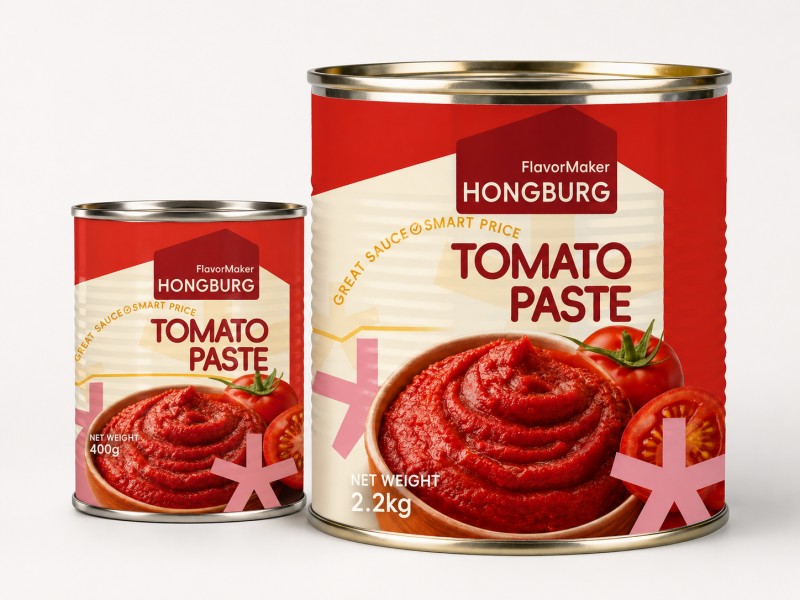
Hongburg supports five main packaging families for tomato paste and sauce products. Although this product focuses on Tetra Pak and aseptic carton packaging, buyers can also discuss pouch, glass jar or bottle, can, and plastic bottle or bucket formats when planning broader product ranges.
| Packaging Type | Included Formats | Net Weight Options |
| Pouch | Sachet / Small Pouch / Stand-up Pouch / Spout Pouch / Flat Pouch / Soft Pack | 10g / 15g / 20g / 250g / 500g / 800g / 1kg |
| Tetra Pak | Aseptic Carton / Carton Pack / Brick Carton / Shelf-stable Carton | 390g / 500g / 1kg |
| Glass Jar or Bottle | Glass Jar / Glass Bottle / Wide-mouth Jar / Retail Glass Packaging | 235g / 473g / 500g / 887g / 940g / 1.02kg |
| Can | Tin Can / Metal Can / Food Can / Canned Format | 400g / 800g / 2.2kg / 3kg |
| Plastic Bottle or Bucket | Slim Plastic Bottle / Squeeze Bottle / Plastic Container / Plastic Jar / Plastic Bucket | 240g / 340g / 430g / 600g / 3kg / 3.75kg |
Custom packaging size, label language, private label design and product specifications can be discussed based on market requirements. For tomato paste, customization may include Brix, viscosity, color, texture, acidity, salt balance and formula direction.
Customization for Carton-Based Projects
A carton-based tomato paste project usually requires both product and packaging discussion. Buyers may need to confirm carton size, label language, product concentration, color, viscosity and cooking application before finalizing an order.
Hongburg can discuss 390g, 500g, 1kg or other carton-related packaging plans depending on the product direction. A retail buyer may focus more on label design and shelf positioning, while an institutional buyer may care more about storage, portion use and kitchen handling. Product specifications such as Brix, texture and color can also be reviewed based on the buyer’s target market or benchmark product.
This helps buyers develop Tomato Paste in Tetra Pak as a market-ready carton product rather than simply changing the outer packaging.
Supporting Shelf-Stable Carton Programs
For buyers developing carton-packed tomato paste, Hongburg’s value is in connecting product specification with carton packaging needs. A carton project may require discussion around Brix, viscosity, color, carton size, label language and target channel positioning.
A supermarket supplier may need a shelf-stable carton pack for retail cooking use. An institutional buyer may prefer aseptic carton tomato paste for regular kitchen supply. A private label buyer may use carton packaging to build a clean and modern tomato ingredient range. Hongburg can help buyers review these details before larger orders, while keeping open the option to extend the same product concept into pouch, glass jar, tin can, metal can, plastic bottle or bucket formats later.
Quality & Supply Capability
For pouch-packed tomato paste, quality control is closely related to filling suitability, texture consistency and packaging performance. Hongburg can support buyers in reviewing Brix, viscosity, color and pouch format before larger orders, helping reduce mismatch between tomato paste specification and the selected soft-pack structure.
Buyers can evaluate samples before scaling up, with freight usually paid by the customer. Product specification, packaging format and label language can be discussed according to the target market, sales channel and product positioning.
FAQ — B2B Buyer Focus
Q1: What carton formats can be used for tomato paste?
Carton formats may include Tetra Pak, aseptic carton, carton pack, brick carton and shelf-stable carton packaging. The suitable format depends on the buyer’s retail, institutional, distribution or private label plan.
Q2: Is Tomato Paste in Tetra Pak suitable for retail channels?
Yes. Tetra Pak tomato paste can be positioned as a shelf-stable carton product for consumers who use tomato paste in home cooking, pasta sauces, soups, stews and other tomato-based recipes.
Q3: How is carton-packed tomato paste different from canned tomato paste?
Carton-packed tomato paste offers a different packaging experience from tin can or metal can formats. It may be selected for carton shelf presentation, lighter handling and certain private label positioning, while canned formats remain useful for traditional export and foodservice supply.
Q4: Can carton size and label language be customized?
Yes. Carton size, label language, private label artwork and product information can be discussed based on the target market and channel requirements.
Q5: Can Brix, viscosity and color be adjusted for Tetra Pak tomato paste?
Yes. Brix, viscosity, color and texture can be discussed based on the buyer’s target application, benchmark product or local market preference.
Q6: Can buyers use carton packaging together with other formats?
Yes. Buyers may develop carton-packed tomato paste while also discussing pouch, glass jar or bottle, can, plastic bottle or bucket formats for different channels or product line extensions.
Hot Tags: Tomato Paste in Tetra Pak, Bulk Tomato Paste, Tomato Paste Manufacturer
Related Category
Send Inquiry
Please Feel free to give your inquiry in the form below. We will reply you in 24 hours.