- English
- Español
- Português
- русский
- Français
- 日本語
- Deutsch
- tiếng Việt
- Italiano
- Nederlands
- ภาษาไทย
- Polski
- 한국어
- Svenska
- magyar
- Malay
- বাংলা ভাষার
- Dansk
- Suomi
- हिन्दी
- Pilipino
- Türkçe
- Gaeilge
- العربية
- Indonesia
- Norsk
- تمل
- český
- ελληνικά
- український
- Javanese
- فارسی
- தமிழ்
- తెలుగు
- नेपाली
- Burmese
- български
- ລາວ
- Latine
- Қазақша
- Euskal
- Azərbaycan
- Slovenský jazyk
- Македонски
- Lietuvos
- Eesti Keel
- Română
- Slovenski
- मराठी
- Srpski језик

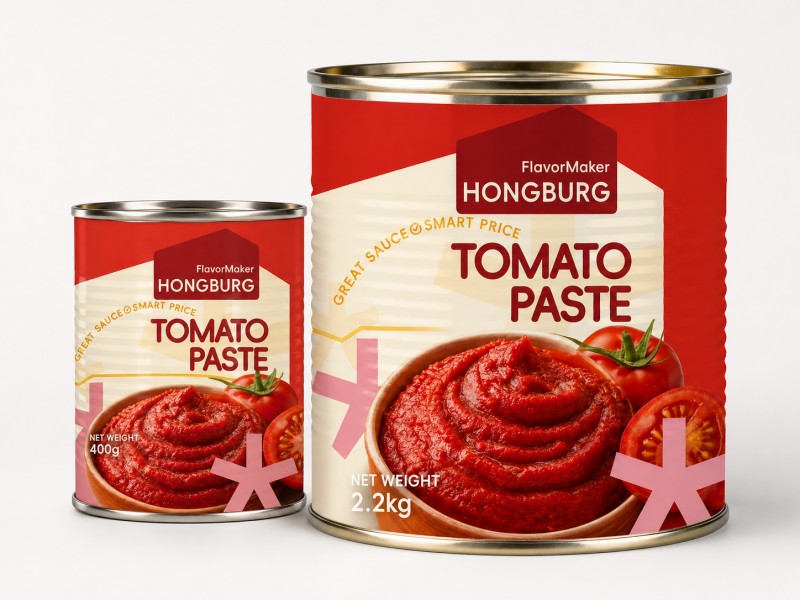
Canned Tomato Paste
Hongburg Canned Tomato Paste is a high-quality, concentrated tomato paste for bulk, wholesale, OEM and private label buyers in industrial and culinary markets. Its uniform consistency and deep tomato flavor are ideal for ketchup, sauces, pizza bases, and prepared foods. Robust tin can packaging ensures long shelf life, easy stacking, and reliable transport, supporting large-scale production or foodservice operations.
Send Inquiry
Product Description
A Familiar Canned Format for Tomato Paste Supply
Canned tomato paste remains one of the most widely understood packaging formats for importers, distributors, foodservice suppliers and food manufacturers. For buyers who need a shelf-stable tomato paste product in a familiar metal can format, Hongburg supplies Canned Tomato Paste for export supply, wholesale purchasing, OEM and private label programs.
Compared with packaging formats that focus on retail visibility or flexible bag use, the canned format is often selected for practical distribution and broad channel acceptance. Tomato paste in tin can or food can packaging can support buyers who need a reliable format for warehouse storage, restaurant supply, catering kitchens, wholesale channels and food processing applications.
Product Information Snapshot
| Item | Description |
| Product Name | Canned Tomato Paste |
| Product Category | Concentrated tomato paste |
| Packaging Family | Can / Tin Can / Metal Can |
| Included Can Forms | Tin Can / Metal Can / Food Can / Canned Format |
| Main Use | Cooking base, sauce manufacturing, foodservice ingredient, wholesale supply |
| Channel Fit | Import, distribution, foodservice, wholesale, food manufacturing |
| Packaging Value | Familiar shelf-stable can format for export and bulk supply |
| Customization Scope | Can size, label language, Brix, viscosity, color, texture |
| Supply Mode | Export supply / Bulk / Wholesale / OEM / Private Label |
| Sample Policy | Samples available, freight usually paid by customer |
| Certifications | ISO22000 / ISO9001 / HACCP / FDA / HALAL |
Why Metal Can Packaging Works for Export Buyers
For many export markets, metal can packaging is a practical and familiar choice. Importers and distributors often evaluate canned tomato paste by can size, carton packing, label language, product specification and repeat supply stability. The format is easy for many buyers to understand because canned tomato products are already common in retail, wholesale and foodservice channels.
A tin can tomato paste product can serve different levels of demand. Smaller cans may support retail or household cooking, while larger food can formats are more suitable for restaurants, catering kitchens or food manufacturers. For buyers managing distributor inventories, the canned format can also support clearer product planning compared with highly fragmented packaging choices.
The value of canned packaging is not only tradition. It is also about practical channel fit, familiar handling and stable supply planning for buyers who need tomato paste in a recognized format.
Foodservice, Wholesale and Processing Applications
Canned tomato paste can be used as a concentrated base for many tomato-based foods. Foodservice buyers may use it in pasta sauces, pizza sauces, stews, soups, braised dishes, marinades and kitchen-prepared sauces. Food manufacturers may use tomato paste in sauce production, ready-meal processing or other tomato-based formulations.
For wholesale buyers, Canned Tomato Paste can be positioned as a stable product for distributors serving restaurants, catering operators, grocery stores or institutional kitchens. The canned format helps buyers cover several customer types without needing to explain a new packaging structure.
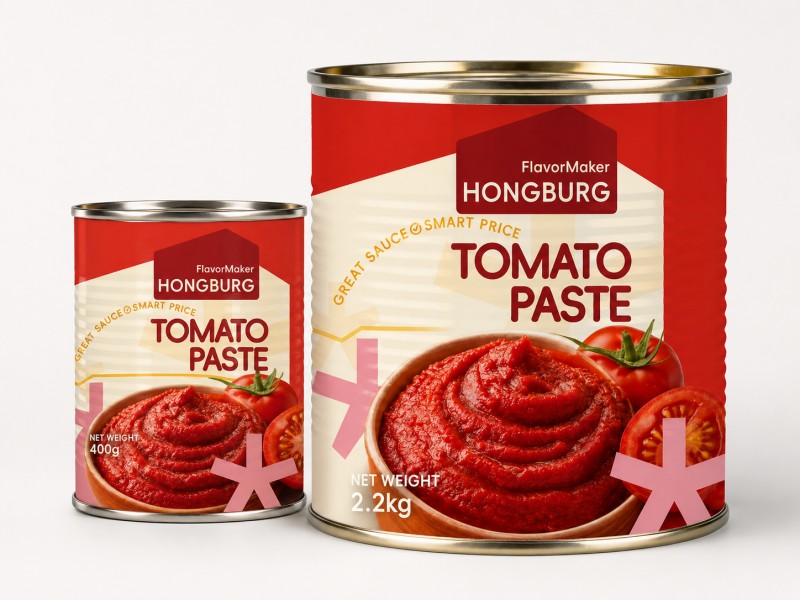
For example, a distributor may use 400g or 800g cans for retail and small foodservice customers, while larger 2.2kg or 3kg metal cans may support restaurant kitchens or processing users. The tomato paste specification can be discussed according to the buyer’s target channel and application.
Pack Size Planning for Distribution and Repeat Orders
Can size selection is an important part of canned tomato paste sourcing. Buyers may choose smaller cans for consumer-facing shelves or larger cans for back-of-house use. The right choice depends on order volume, customer type, storage habits and whether the product is sold through retail, wholesale, foodservice or food manufacturing channels.
For repeat orders, buyers often need consistency in product specification, can format, carton packing, label language and market positioning. A canned tomato paste project may also require coordination between product requirements and packaging expectations, especially when buyers are replacing an existing supplier or developing a private label canned product.
Hongburg can discuss can size, Brix, viscosity, color, texture and label language based on the buyer’s channel plan, helping the product fit both procurement expectations and practical use.
Packaging Options & Custom Support
Hongburg supports five main packaging families for tomato paste and sauce products. Although this product focuses on canned tomato paste in tin can, metal can and food can formats, buyers can also discuss pouch, Tetra Pak, glass jar or bottle, and plastic bottle or bucket packaging when planning broader product ranges.
| Packaging Type | Included Formats | Net Weight Options |
| Pouch | Sachet / Small Pouch / Stand-up Pouch / Spout Pouch / Flat Pouch / Soft Pack | 10g / 15g / 20g / 250g / 500g / 800g / 1kg |
| Tetra Pak | Aseptic Carton / Carton Pack / Brick Carton / Shelf-stable Carton | 390g / 500g / 1kg |
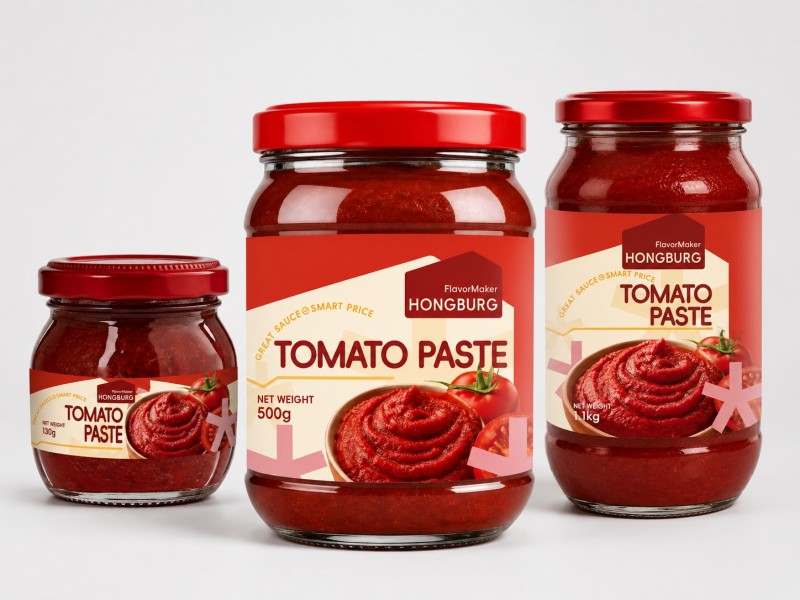
| Glass Jar or Bottle | Glass Jar / Glass Bottle / Wide-mouth Jar / Retail Glass Packaging | 235g / 473g / 500g / 887g / 940g / 1.02kg |
| Can | Tin Can / Metal Can / Food Can / Canned Format | 400g / 800g / 2.2kg / 3kg |
| Plastic Bottle or Bucket | Slim Plastic Bottle / Squeeze Bottle / Plastic Container / Plastic Jar / Plastic Bucket | 240g / 340g / 430g / 600g / 3kg / 3.75kg |
Custom packaging size, label language, private label design and product specifications can be discussed based on market requirements. For tomato paste, customization may include Brix, viscosity, color, texture, acidity, salt balance and formula direction.
Customization for Canned Tomato Paste Projects
A canned tomato paste project usually requires attention to both product specification and packaging details. Buyers may need to confirm can size, label language, Brix level, color, viscosity and end-use application before moving into bulk orders.
Hongburg can support discussion around 400g, 800g, 2.2kg, 3kg and other canned format requirements. A foodservice buyer may prefer larger cans for kitchen efficiency, while a retail buyer may need smaller cans with clear shelf labeling. Food manufacturers may care more about Brix, viscosity and consistency when using tomato paste as a processing ingredient.
This helps buyers develop canned tomato paste as a practical supply product rather than treating can packaging as only an outer container.
Supporting Export Canned Supply
For buyers sourcing canned tomato paste, Hongburg’s support focuses on matching product specification with export and channel requirements. A canned project may involve can size selection, carton packing discussion, label language, Brix, viscosity, color and repeat order planning.
Importers may need a familiar canned format for their distribution network. Foodservice suppliers may need larger food cans for kitchen users. Private label buyers may need a canned tomato paste product that fits their shelf and brand positioning.
Hongburg can help review these points before larger orders, while also allowing future expansion into pouch, Tetra Pak, glass jar or bottle, plastic bottle or bucket formats if the buyer develops a wider product range.
Quality & Supply Capability
For canned tomato paste, consistency in Brix, viscosity, color, texture and can filling appearance is important for repeat purchasing. Hongburg supports export-oriented tomato paste supply with quality control, packaging discussion and OEM/private label cooperation.
Buyers can evaluate samples before scaling up, with freight usually paid by the customer. Product specification, can format, label language and packing requirements can be discussed according to the target market, customer channel and purchasing plan.
FAQ — B2B Buyer Focus
Q1: What can sizes are available for canned tomato paste?
Hongburg can discuss canned tomato paste in common tin can or metal can formats such as 400g, 800g, 2.2kg and 3kg. Other requirements can be discussed based on the buyer’s channel and order plan.
Q2: Is canned tomato paste suitable for export distribution?
Yes. The canned format is familiar to many importers, distributors, wholesalers and foodservice buyers. It can support export supply, warehouse storage, wholesale distribution and repeat purchasing.
Q3: Can canned tomato paste be used by foodservice buyers or food manufacturers?
Yes. It can be used as a cooking base, sauce manufacturing ingredient, foodservice kitchen ingredient or processing material for tomato-based products.
Q4: How is canned tomato paste different from glass jar or carton-packed tomato paste?
Canned tomato paste focuses more on familiar shelf-stable metal can packaging, export distribution and bulk supply. Glass packaging emphasizes visible retail presentation, while carton packs may support shelf-stable carton positioning and lighter handling.
Q5: Can Brix, viscosity and color be adjusted for canned tomato paste?
Yes. Brix, viscosity, color and texture can be discussed based on the buyer’s target application, benchmark product, processing needs or local market requirements.
Q6: Can buyers combine canned packaging with other formats?
Yes. Buyers may develop canned tomato paste while also discussing pouch, Tetra Pak, glass jar or bottle, plastic bottle or bucket formats for different channels or product line extensions.
Hot Tags: OEM Canned Tomato Paste
Related Category
Send Inquiry
Please Feel free to give your inquiry in the form below. We will reply you in 24 hours.