- English
- Español
- Português
- русский
- Français
- 日本語
- Deutsch
- tiếng Việt
- Italiano
- Nederlands
- ภาษาไทย
- Polski
- 한국어
- Svenska
- magyar
- Malay
- বাংলা ভাষার
- Dansk
- Suomi
- हिन्दी
- Pilipino
- Türkçe
- Gaeilge
- العربية
- Indonesia
- Norsk
- تمل
- český
- ελληνικά
- український
- Javanese
- فارسی
- தமிழ்
- తెలుగు
- नेपाली
- Burmese
- български
- ລາວ
- Latine
- Қазақша
- Euskal
- Azərbaycan
- Slovenský jazyk
- Македонски
- Lietuvos
- Eesti Keel
- Română
- Slovenski
- मराठी
- Srpski језик

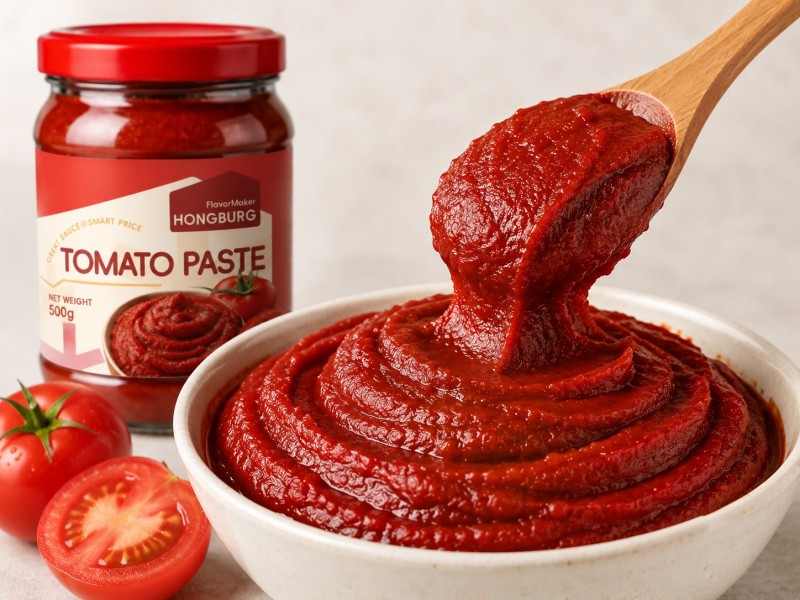
High Viscosity Hot Break Tomato Paste
Hongburg High Viscosity Hot Break Tomato Paste is a thick, concentrated tomato paste developed for bulk, wholesale, OEM and private label buyers who need robust sauce body, superior texture, and stable processing performance for ketchup, thick tomato sauce, pizza sauce, and ready-meal applications. Hot Break processing ensures consistent viscosity and sauce structure, while flexible packaging options support different production scales and operational workflows.
Send Inquiry
Product Description
Viscosity Support for Thick Tomato-Based Sauces
For sauce manufacturers and food processors, viscosity is more than a technical parameter. It affects how the finished sauce flows, holds, spreads and performs during filling, cooking, serving or further processing. Hongburg, a professional manufacturer in China, supplies High Viscosity Hot Break Tomato Paste for buyers who need a tomato paste base that supports thicker sauce structure and more stable texture performance.
Hot Break tomato paste is especially relevant for applications where sauce body matters. Ketchup producers may evaluate how the paste contributes to thickness and consistency. Pizza sauce manufacturers may care about spreadability and surface hold. Ready-meal factories may need a tomato base that keeps a suitable texture after heating, mixing or packing.
This product is different from high Brix deep red tomato paste. The main value here is not only concentration or color, but viscosity, texture contribution and finished sauce body.
Product Information Snapshot
| Item | Description |
| Product Name | High Viscosity Hot Break Tomato Paste |
| Product Category | Concentrated tomato paste |
| Process Focus | Hot Break process / High viscosity |
| Performance Focus | Sauce body / Thickness / Texture stability |
| Main Use | Ketchup, thick tomato sauce, pizza sauce, ready meals, prepared sauces |
| Buyer Fit | Sauce manufacturers, food processors, OEM buyers, importers |
| Key Buyer Value | Supports thicker sauce structure and processing consistency |
| Adjustable Parameters | Viscosity, Brix, color, texture, acidity, salt balance |
| Packaging Support | Pouch / Tetra Pak / Glass Jar or Bottle / Can / Plastic Bottle or Bucket |
| Supply Mode | Export supply / Bulk / Wholesale / OEM / Private Label |
| Sample Policy | Samples available, freight usually paid by customer |
| Certifications | ISO22000 / ISO9001 / HACCP / FDA / HALAL |
How Hot Break Processing Supports Sauce Body
Hot Break processing is commonly associated with tomato paste that needs stronger viscosity and body. For buyers producing thick tomato-based sauces, this matters because the paste must contribute not only tomato flavor, but also structure and consistency in the finished product.
A high viscosity tomato paste can help support sauce thickness, coating behavior and texture stability depending on the buyer’s formula. In ketchup production, buyers may review how the tomato paste affects sauce body and flow. In thick tomato sauce or pizza sauce applications, spreadability and surface hold may be more important. In prepared foods, the tomato base may need to remain stable after heating or mixing with other ingredients.
For this reason, buyers usually need to evaluate High Viscosity Hot Break Tomato Paste in their own application rather than judging only by the raw paste sample.
Application Value for Ketchup, Pizza Sauce and Ready Meals
Different tomato-based products need different texture behavior. Ketchup often requires a balanced flow that is not too thin and not overly heavy. Thick tomato sauce may need a fuller body for cooking, serving or filling. Pizza sauce may need a texture that spreads well on dough and stays in place during preparation.
Ready-meal producers may also use hot break tomato paste as part of a sauce base for meal trays, stews, baked dishes or prepared foods. In these applications, viscosity and texture consistency can affect how the finished product looks and performs after processing.
For example, a sauce factory may test tomato paste viscosity in a ketchup trial, while a pizza sauce manufacturer may test spreadability and surface coverage. These tests help buyers decide whether the product fits their formula, equipment and finished product goals.
Evaluating Texture Before Bulk Orders
For viscosity-focused tomato paste projects, sample evaluation is especially important. A product may look thick as raw paste, but buyers still need to test how it performs after dilution, heating, seasoning, blending or filling.
Hongburg can discuss viscosity, Brix, color, texture and application direction based on the buyer’s target product. A ketchup buyer may focus on flow and sauce body. A pizza sauce buyer may care about spreadability. A ready-meal buyer may review texture stability after heating and packing.
This review process helps buyers reduce mismatch between the tomato paste specification and the actual finished sauce performance before moving into larger orders.
Packaging Options & Custom Support
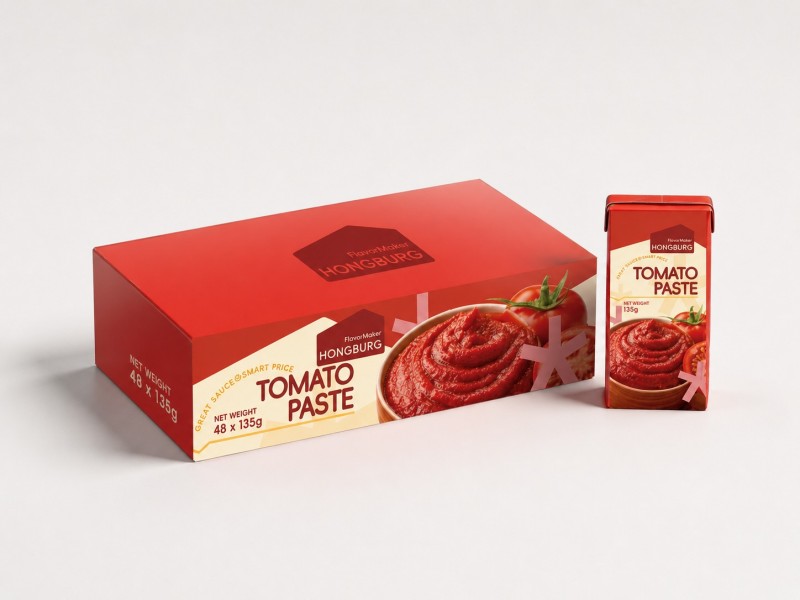
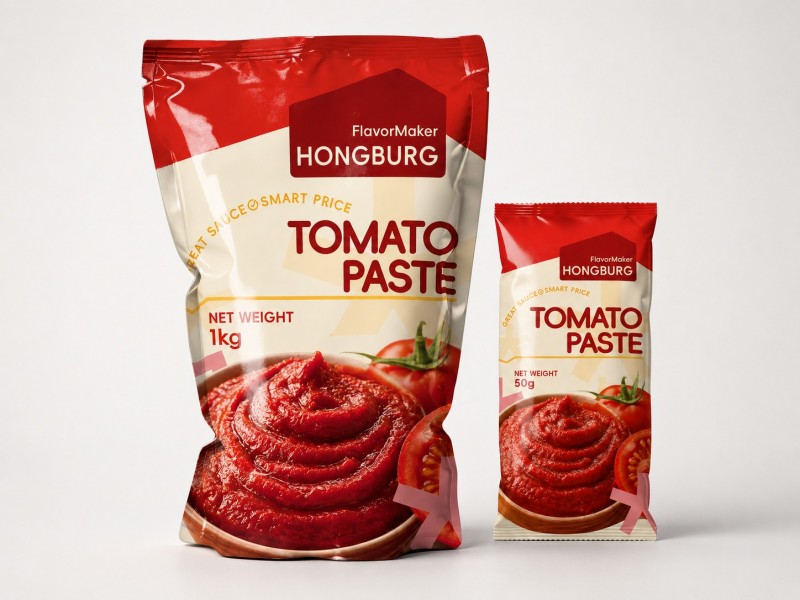
Although this product focuses on Hot Break processing and high viscosity performance, packaging should still match the buyer’s production flow, storage method, sales channel and handling needs. Hongburg supports five main packaging families for tomato paste and sauce products.
| Packaging Type | Included Formats | Net Weight Options |
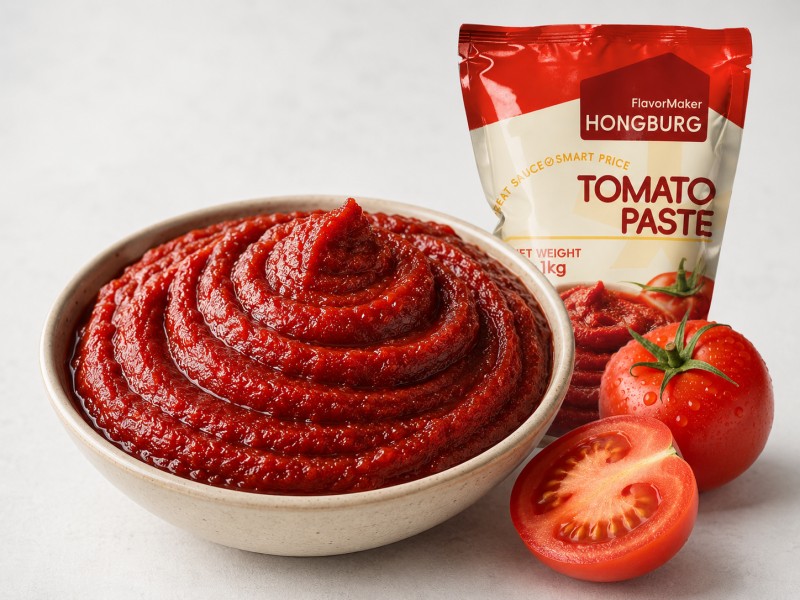
| Pouch | Sachet / Small Pouch / Stand-up Pouch / Spout Pouch / Flat Pouch / Soft Pack | 10g / 15g / 20g / 250g / 500g / 800g / 1kg |
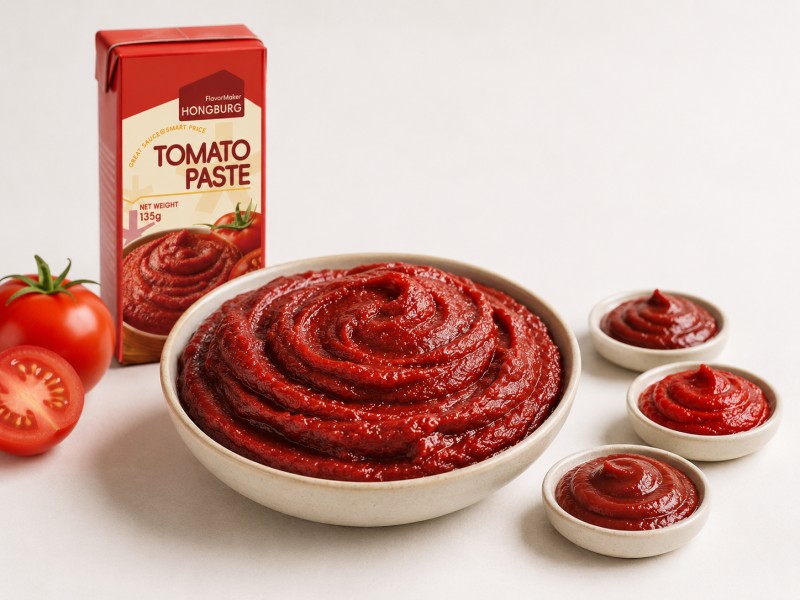
| Tetra Pak | Aseptic Carton / Carton Pack / Brick Carton / Shelf-stable Carton | 390g / 500g / 1kg |
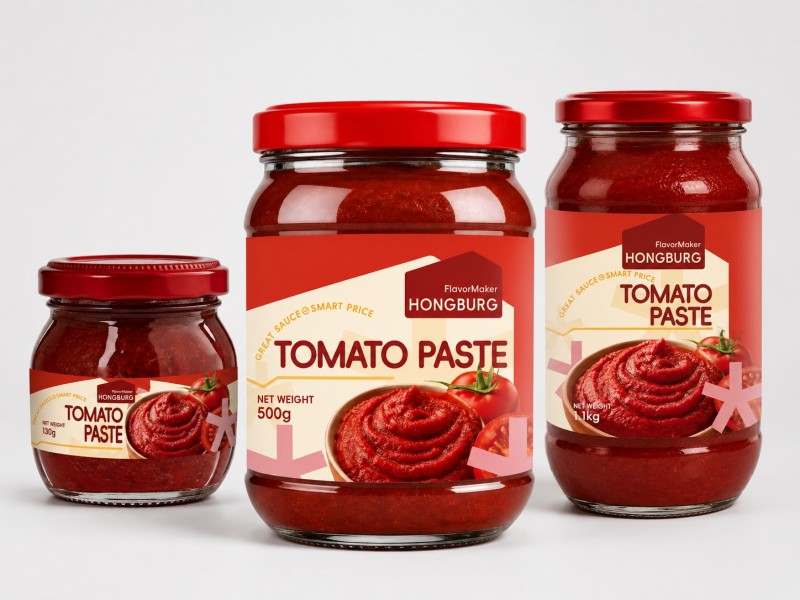
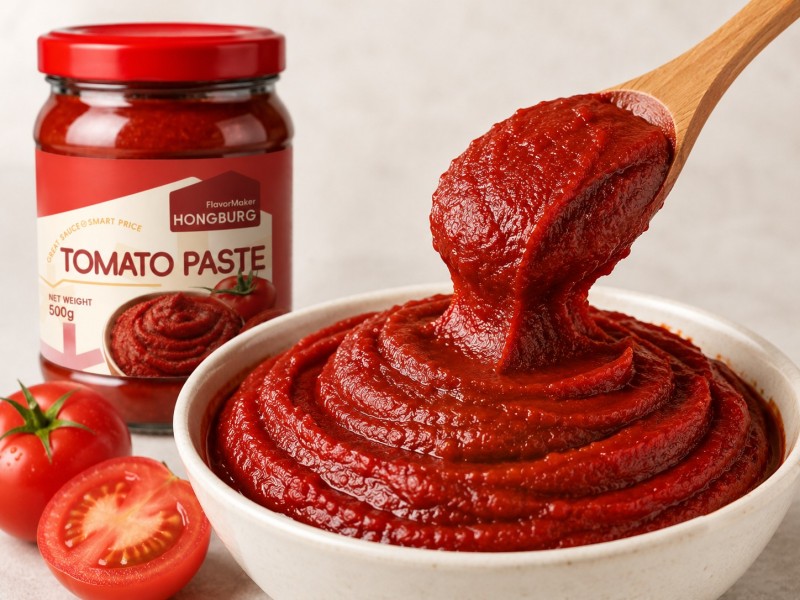
| Glass Jar or Bottle | Glass Jar / Glass Bottle / Wide-mouth Jar / Retail Glass Packaging | 235g / 473g / 500g / 887g / 940g / 1.02kg |
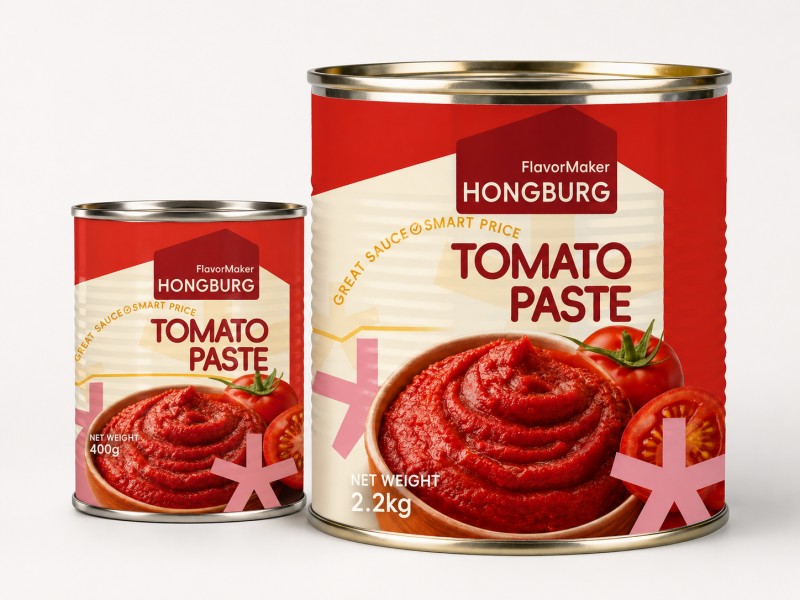
| Can | Tin Can / Metal Can / Food Can / Canned Format | 400g / 800g / 2.2kg / 3kg |
| Plastic Bottle or Bucket | Slim Plastic Bottle / Squeeze Bottle / Plastic Container / Plastic Jar / Plastic Bucket | 240g / 340g / 430g / 600g / 3kg / 3.75kg |
Custom packaging size, label language, private label design and product specifications can be discussed based on market requirements. For high viscosity hot break tomato paste, buyers may also review viscosity level, Brix, color, texture, acidity, salt balance and formula suitability.
Customization for Processing and Texture Needs
High viscosity tomato paste projects should be reviewed from both specification and application perspectives. Buyers may need to confirm whether the viscosity fits their equipment, formula, heating process, filling method or finished product texture.
Hongburg can discuss viscosity, Brix, color, texture and packaging direction based on the buyer’s product plan. A ketchup producer may focus on sauce body and flow. A pizza sauce manufacturer may focus on spreadability and surface hold. A food manufacturer may need the tomato paste to work consistently in prepared sauce or ready-meal production.
This makes customization less about one isolated number and more about matching process, texture and finished product performance.
Supporting Viscosity-Focused Tomato Paste Projects
For buyers developing thick tomato-based sauces, Hongburg’s support focuses on connecting tomato paste viscosity with real production use. The product should not only appear thick as raw paste; it should also help support the buyer’s sauce body, processing behavior and finished product target.
A ketchup manufacturer may review flow and consistency. A pizza sauce producer may test spreadability. A ready-meal factory may evaluate texture after heating and packing. Hongburg can help buyers discuss these requirements before larger orders, while keeping packaging options open across pouch, Tetra Pak, glass jar or bottle, can, and plastic bottle or bucket formats.
Quality & Supply Capability
For High Viscosity Hot Break Tomato Paste, quality control is closely related to viscosity consistency, texture stability, Brix, color and application performance. Buyers using this product in finished sauces usually need stable behavior across repeat orders.
Hongburg supports export-oriented tomato paste supply with sample evaluation, packaging discussion and OEM/private label cooperation. Buyers can test samples before scaling up, with freight usually paid by the customer. Product specification and packaging format can be discussed according to the target market, processing application and order plan.
FAQ — B2B Buyer Focus
Q1: What is the advantage of Hot Break tomato paste?
Hot Break tomato paste is often selected when buyers need stronger viscosity and sauce body. It can support thicker texture, better structure and more suitable performance in tomato-based sauce applications.
Q2: Is high viscosity tomato paste suitable for ketchup production?
Yes. High viscosity tomato paste can be used for ketchup production where buyers need sauce body, thickness and texture consistency. Samples can be tested in the buyer’s own formula before bulk orders.
Q3: Can viscosity be adjusted based on my formula?
Viscosity can be discussed together with Brix, color, texture and target application. Buyers can review samples and test how the tomato paste performs in their production process.
Q4: How is High Viscosity Hot Break Tomato Paste different from High Brix Deep Red Tomato Paste?
High Viscosity Hot Break Tomato Paste focuses on viscosity, texture and sauce body. High Brix Deep Red Tomato Paste focuses more on concentration, deep red color and finished product color contribution.
Q5: Can buyers test texture performance before bulk orders?
Yes. Samples are available for evaluation, with freight usually paid by the customer. Buyers can review viscosity, thickness, spreadability and sauce body in their own application tests.
Q6: Which packaging formats are available for high viscosity tomato paste?
Hongburg supports pouch, Tetra Pak, glass jar or bottle, can, and plastic bottle or bucket packaging families. The suitable format depends on processing use, foodservice demand, retail positioning or private label planning.
Hot Tags: High Viscosity Hot Break Tomato Paste Manufacturer, Hot Break Tomato Paste Supplier, High Viscosity Tomato Paste Wholesale
Related Category
Send Inquiry
Please Feel free to give your inquiry in the form below. We will reply you in 24 hours.