- English
- Español
- Português
- русский
- Français
- 日本語
- Deutsch
- tiếng Việt
- Italiano
- Nederlands
- ภาษาไทย
- Polski
- 한국어
- Svenska
- magyar
- Malay
- বাংলা ভাষার
- Dansk
- Suomi
- हिन्दी
- Pilipino
- Türkçe
- Gaeilge
- العربية
- Indonesia
- Norsk
- تمل
- český
- ελληνικά
- український
- Javanese
- فارسی
- தமிழ்
- తెలుగు
- नेपाली
- Burmese
- български
- ລາວ
- Latine
- Қазақша
- Euskal
- Azərbaycan
- Slovenský jazyk
- Македонски
- Lietuvos
- Eesti Keel
- Română
- Slovenski
- मराठी
- Srpski језик

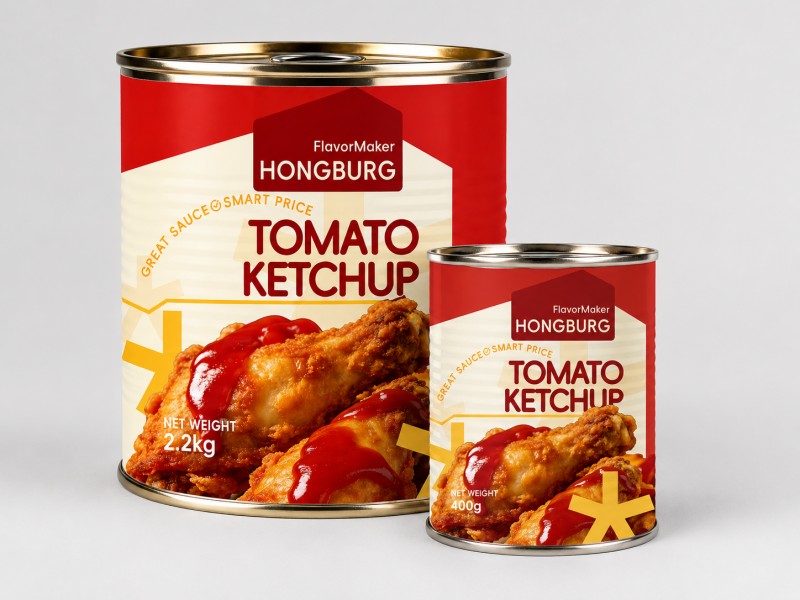
Tomato Ketchup in Tin Can
Hongburg Tomato Ketchup in Tin Can is developed for bulk, wholesale, OEM and private label buyers who need shelf-stable canned ketchup for export distribution, wholesale supply, foodservice kitchens and institutional channels. The tin can format supports practical storage, larger-volume handling and repeat purchasing, while ketchup sweetness, acidity, viscosity, color, can size and label language can be discussed according to market and channel requirements.
Send Inquiry
Product Description
Canned Ketchup for Export and Wholesale Supply
Hongburg offers Tomato Ketchup in Tin Can for buyers who need ketchup in a familiar, shelf-stable and export-friendly canned format. For importers, distributors, wholesalers and foodservice suppliers, tin can packaging can be a practical option when the product needs to move through warehouse storage, bulk distribution and kitchen-use channels.
Compared with sachet ketchup, which is designed for single-serve portion control, canned ketchup is more suitable for buyers who need larger-volume use or wholesale supply. Compared with glass bottle ketchup, tin can packaging is less focused on retail visibility and more focused on storage, handling and supply efficiency. Compared with Tetra Pak ketchup, the tin can format may be preferred in markets where canned food and canned condiments are already familiar to buyers and end users.
For foodservice and institutional customers, tomato ketchup in metal can or food can packaging can support kitchens that need a stable supply format for daily preparation, portioning or back-of-house use. This makes canned ketchup relevant for distributors serving restaurants, catering companies, cafeterias, institutional buyers and wholesale food channels.
Product Information Snapshot
| Item | Description |
| Product Name | Tomato Ketchup in Tin Can |
| Product Category | Tomato Ketchup |
| Packaging Focus | Tin Can / Metal Can / Food Can |
| Main Use | Foodservice, wholesale, institutional kitchens, export distribution |
| Buyer Fit | Importers, distributors, wholesalers, foodservice suppliers, private label buyers |
| Key Buyer Value | Shelf-stable canned format, export-friendly handling, larger-volume supply |
| Texture Direction | Smooth / pourable / kitchen-use friendly |
| Flavor Direction | Balanced tomato flavor, sweetness and acidity |
| Customization Scope | Can size, label language, sweetness, acidity, viscosity, private label design |
| Supply Mode | Export supply / Bulk / Wholesale / OEM / Private Label |
| Sample Policy | Samples available, freight usually paid by customer |
| Certifications | ISO22000 / ISO9001 / HACCP / FDA / HALAL |
Why Tin Can Packaging Works for Ketchup Buyers
Tin can packaging can help buyers manage ketchup as a stable supply item rather than only a consumer-facing table condiment. For export markets, canned packaging is familiar, easy to identify and suitable for many wholesale and foodservice channels. Buyers who already distribute canned foods, tomato paste, canned sauces or foodservice ingredients may find canned ketchup easier to add into an existing product range.
The metal can format can also support practical handling. It is suitable for carton packing, warehouse storage and repeat supply planning. For distributors, this matters because customers may need ketchup in larger quantities rather than small retail bottles or single-serve sachets. For institutional kitchens, canned ketchup can be opened and used according to kitchen volume, menu needs or prepared food operations.
A food can format may also be useful when buyers need a clear product specification and stable packaging type for long-term purchasing. In these projects, buyers usually review can size, label language, carton packing, ketchup viscosity, flavor direction and repeat order consistency before confirming larger orders.
Foodservice, Institutional and Wholesale Applications
Tomato ketchup in tin can packaging can be used by foodservice kitchens, catering operators, cafeterias, restaurant suppliers and wholesale buyers. It may be used as a condiment, a kitchen sauce base, a menu ingredient or part of a prepared food program depending on the buyer’s operation.
For restaurants and catering buyers, canned ketchup can support back-of-house preparation where staff may portion ketchup into serving containers or use it in sauces, marinades, burger meals, fried food service or prepared dishes. For institutional kitchens, the format can be practical when meals are produced in larger volumes and condiment supply needs to be planned by carton, can size or weekly consumption.
For wholesalers and distributors, canned ketchup can serve customers who prefer a familiar shelf-stable canned format. It can be positioned for foodservice operators, local grocery supply, institutional accounts or markets where tin can packaging remains a trusted and practical packaging choice.
Flavor, Texture and Kitchen-Use Performance
Canned ketchup still needs to perform well after opening and during kitchen use. Buyers usually evaluate tomato ketchup by balanced sweetness, acidity, tomato flavor, color, viscosity and smoothness. If the ketchup is too thin, it may not work well for dipping or portioning. If it is too thick, it may be difficult to pour or handle in foodservice preparation.
Hongburg can discuss product specifications based on the buyer’s target use. A foodservice distributor may need a smooth ketchup with stable viscosity for restaurant kitchens. A wholesale buyer may prefer a familiar balanced taste that fits many end customers. A private label buyer may need ketchup flavor, label language and can artwork aligned with a local market.
Sample testing can help buyers review flavor, color, viscosity, can filling appearance and kitchen-use behavior before larger orders. This is especially useful for buyers replacing an existing canned ketchup supplier or adding canned ketchup to a broader condiment range.
Packaging Options & Custom Support
Hongburg supplies tomato ketchup in tin can, metal can and food can formats for buyers who need shelf-stable canned ketchup for export, wholesale, foodservice, institutional or private label channels. The canned format is the main focus for this product, while other packaging formats can be discussed when buyers want to serve additional markets.
For example, sachet and small pouch formats may support takeaway and portion-control programs. Glass bottle packaging can support retail visibility and table use. Tetra Pak or aseptic carton formats may support carton-based distribution. Plastic squeeze bottle, slim plastic bottle or plastic bucket formats may support retail dispensing or larger foodservice use.
| Packaging Type | Included Formats | Net Weight Options |
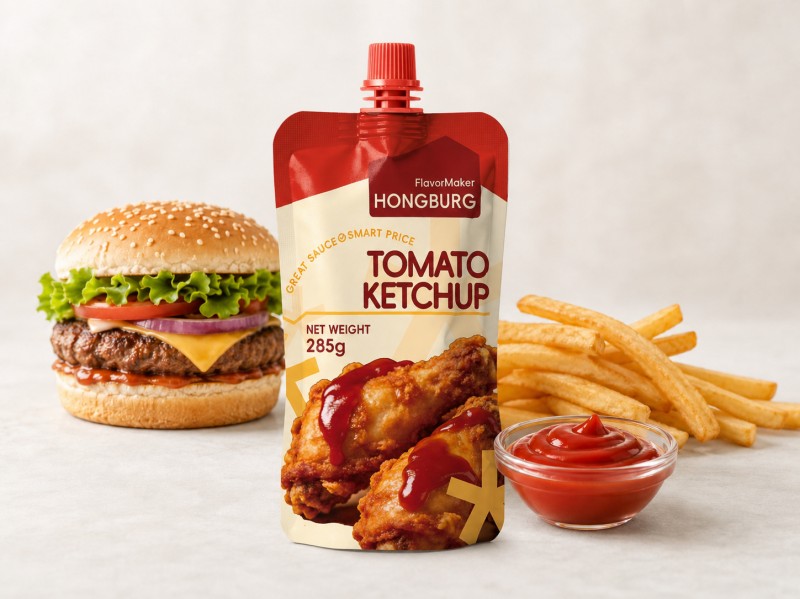
| Pouch | Sachet / Small Pouch / Stand-up Pouch / Spout Pouch / Flat Pouch / Soft Pack | 10g / 15g / 20g / 250g / 500g / 800g / 1kg |
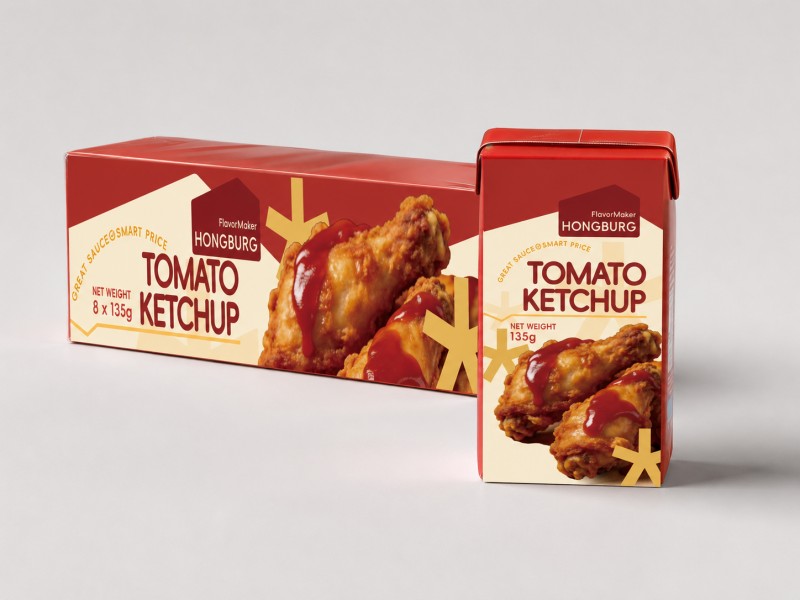
| Tetra Pak | Aseptic Carton / Carton Pack / Brick Carton / Shelf-stable Carton | 390g / 500g / 1kg |
| Glass Jar or Bottle | Glass Jar / Glass Bottle / Wide-mouth Jar / Retail Glass Packaging | 235g / 473g / 500g / 887g / 940g / 1.02kg |
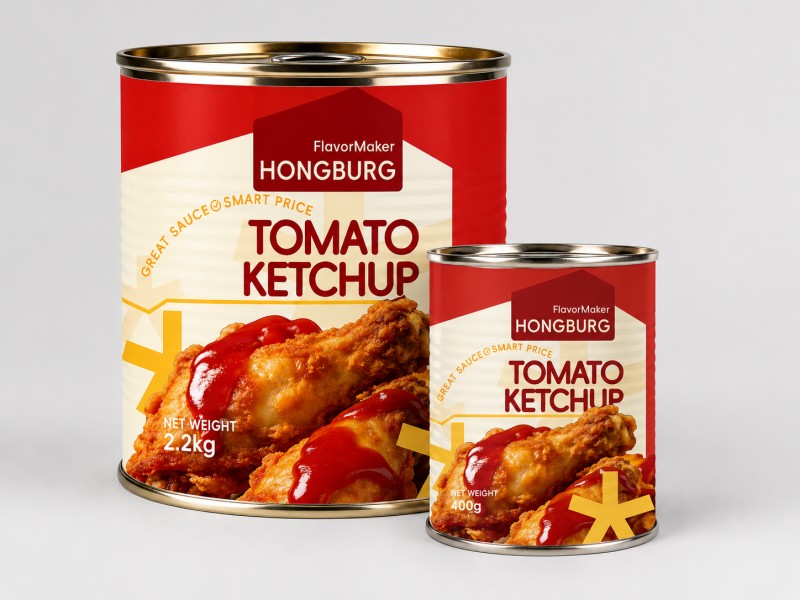
| Can | Tin Can / Metal Can / Food Can / Canned Format | 400g / 800g / 2.2kg / 3kg |
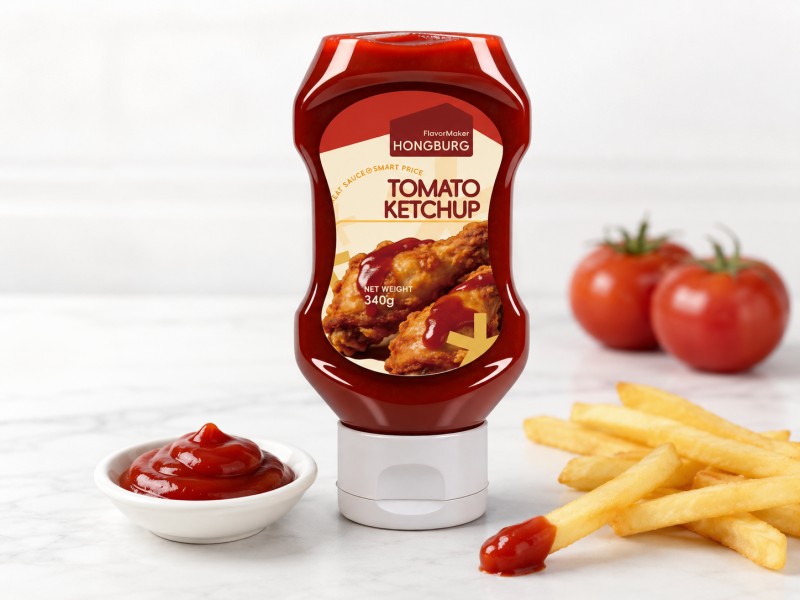
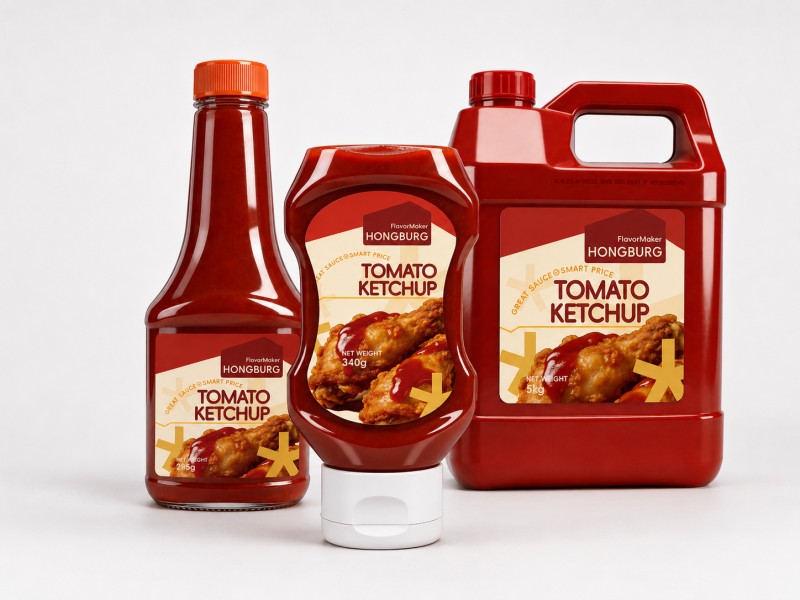
| Plastic Bottle or Bucket | Slim Plastic Bottle / Squeeze Bottle / Plastic Container / Plastic Jar / Plastic Bucket | 240g / 340g / 430g / 600g / 3kg / 3.75kg |
For canned ketchup projects, buyers can discuss can size, label language, private label artwork, carton packing, sweetness, acidity, viscosity, color and tomato flavor direction. The final packaging plan should match the buyer’s distribution model, kitchen use, wholesale channel or private label positioning.
Customization for Canned Ketchup Projects
Different markets may expect different ketchup profiles. Some buyers need a sweeter and milder ketchup for broad foodservice use, while others may prefer stronger acidity, deeper tomato flavor or thicker dipping texture. For canned ketchup, the product also needs to match how the can will be opened, stored, portioned and used after opening.
Hongburg can discuss customization based on the buyer’s channel. An importer may focus on can size, local label language and product positioning. A foodservice supplier may care more about viscosity, pouring behavior and kitchen handling. A private label buyer may need artwork, carton packing and flavor direction that match an existing canned condiment range.
Customization may include sweetness, acidity, salt balance, tomato flavor intensity, viscosity, color, can size, label language and private label design. The goal is to help buyers develop a canned ketchup product that works for real distribution and kitchen-use needs, not simply to place standard ketchup into a tin can.
Supporting Export Canned Ketchup Supply
Hongburg supports buyers developing canned ketchup for export supply, wholesale distribution, foodservice operations and private label programs. In this type of project, buyers usually need to review both product performance and canned packaging suitability.
An importer may need a shelf-stable canned ketchup format for local distribution. A wholesaler may need a metal can product that fits carton-based stock planning. A foodservice buyer may need ketchup suitable for kitchen handling after opening. Hongburg can help buyers discuss these details before larger orders.
Buyers can start with tin can ketchup for export or wholesale channels and later review other formats if the business expands. The same ketchup direction may be developed into sachet, small pouch, stand-up pouch, spout pouch, glass bottle, squeeze bottle, Tetra Pak, plastic bucket or other packaging formats depending on channel needs.
Quality & Supply Capability
For Tomato Ketchup in Tin Can, quality control is closely related to flavor consistency, viscosity, color, filling appearance, can suitability and repeat supply. Buyers using canned ketchup for wholesale or foodservice channels usually need stable performance across orders.
Hongburg supports export-oriented ketchup supply with OEM and private label cooperation. Product specification, can format, label language and packaging details can be discussed according to the target market and buyer’s channel plan. Samples are available for evaluation, with freight usually paid by the customer.
Relevant quality and supply references may include ISO22000, ISO9001, HACCP, FDA and HALAL. These certifications can support buyer review, while the final specification should be confirmed through sample testing and project discussion.
FAQ — B2B Buyer Focus
Q1: Is Tomato Ketchup in Tin Can suitable for export and wholesale supply?
Yes. Tin can ketchup is suitable for importers, distributors, wholesalers, foodservice suppliers and institutional buyers who need a shelf-stable canned condiment format.
Q2: What can formats can be used for ketchup?
Hongburg can discuss tin can, metal can, food can and canned format options. The suitable size and format depend on the buyer’s target market, foodservice use and distribution plan.
Q3: Can can size, label language and private label artwork be customized?
Yes. Can size, label language, private label artwork, carton packing and product information can be discussed based on market and channel requirements.
Q4: Can sweetness, acidity and viscosity be adjusted?
Yes. Hongburg can discuss sweetness, acidity, tomato flavor intensity, viscosity, color and texture according to local market preference or buyer requirements.
Q5: Can buyers test samples before confirming bulk orders?
Yes. Samples are available for evaluation, with freight usually paid by the customer. Buyers can test flavor, viscosity, color, filling appearance and kitchen-use performance before larger orders.
Q6: Can the same ketchup formula be supplied in sachets, bottles or buckets later?
Yes. Buyers may start with tin can ketchup and later discuss sachets, small pouches, glass bottles, squeeze bottles, Tetra Pak, plastic buckets or other formats for different channels.
Hot Tags: tomato ketchup in tin can manufacturer, bulk tomato ketchup supplier, canned tomato ketchup wholesale
Related Category
Send Inquiry
Please Feel free to give your inquiry in the form below. We will reply you in 24 hours.