- English
- Español
- Português
- русский
- Français
- 日本語
- Deutsch
- tiếng Việt
- Italiano
- Nederlands
- ภาษาไทย
- Polski
- 한국어
- Svenska
- magyar
- Malay
- বাংলা ভাষার
- Dansk
- Suomi
- हिन्दी
- Pilipino
- Türkçe
- Gaeilge
- العربية
- Indonesia
- Norsk
- تمل
- český
- ελληνικά
- український
- Javanese
- فارسی
- தமிழ்
- తెలుగు
- नेपाली
- Burmese
- български
- ລາວ
- Latine
- Қазақша
- Euskal
- Azərbaycan
- Slovenský jazyk
- Македонски
- Lietuvos
- Eesti Keel
- Română
- Slovenski
- मराठी
- Srpski језик

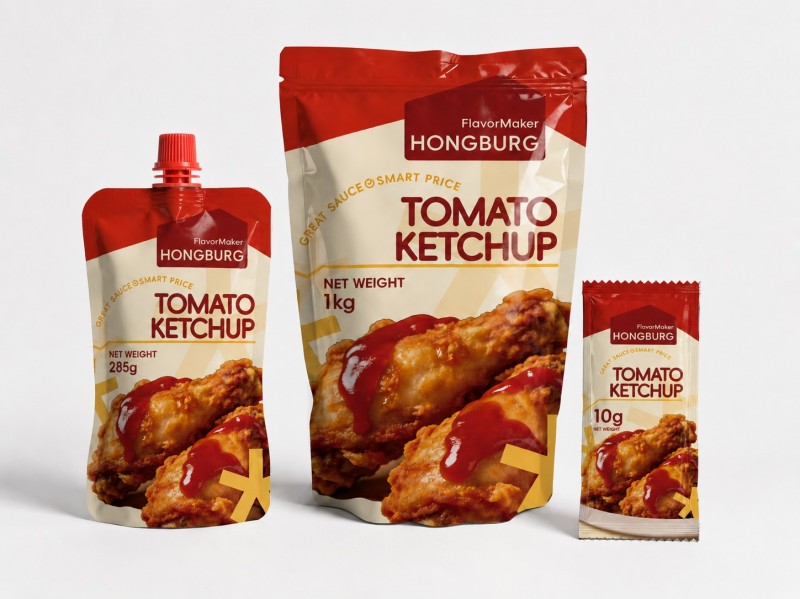
Tomato Ketchup in Sachet
Hongburg Tomato Ketchup in Sachet is developed for bulk, wholesale, OEM and private label buyers who need hygienic single-serve ketchup for fast food, takeaway, catering and institutional foodservice. Each sachet offers controlled portions, smooth texture, balanced tomato flavor and easy distribution, helping buyers serve ketchup consistently across meal boxes, quick-service counters, catering trays and private label condiment programs.
Send Inquiry
Product Description
Single-Serve Ketchup for Fast Food and Takeaway Programs
Hongburg offers Tomato Ketchup in Sachet for buyers who need ketchup in a clean, portable and portion-controlled format. For fast food chains, takeaway suppliers, catering operators and distributors, sachets make ketchup easier to count, pack, store and distribute with individual meals.
Single-serve ketchup is especially useful when operators want to reduce manual handling and keep every serving consistent. Instead of using shared bottles or manually portioned sauces, buyers can place one or more ketchup sachets directly into meal bags, lunch boxes, burger sets, fries packs or catering trays. This helps improve service speed while giving customers a simple ready-to-use condiment portion.
For distributors and foodservice suppliers, sachet ketchup also works as a practical item for customers who sell high-volume meals. It can be supplied to quick-service restaurants, convenience food operators, vending meal programs, school catering, staff canteens, travel catering and event foodservice. The key value is not only the ketchup itself, but the way the sachet format supports daily serving efficiency.
Product Information Snapshot
| Item | Description |
| Product Name | Tomato Ketchup in Sachet |
| Product Category | Tomato Ketchup |
| Packaging Focus | Single-serve sachet / portion pack |
| Main Use | Fast food, takeaway, catering, meal kits, institutional foodservice |
| Buyer Fit | Distributors, foodservice suppliers, fast food chains, private label buyers |
| Key Buyer Value | Portion control, hygiene, easy distribution, consistent serving |
| Texture Direction | Smooth / squeezable / dip-friendly |
| Flavor Direction | Balanced tomato taste, sweetness and acidity |
| Customization Scope | Sachet size, label language, sweetness, acidity, viscosity, private label design |
| Supply Mode | Export supply / Bulk / Wholesale / OEM / Private Label |
| Sample Policy | Samples available, freight usually paid by customer |
| Certifications | ISO22000 / ISO9001 / HACCP / FDA / HALAL |
Portion Control for High-Volume Meal Service
For many B2B buyers, portion control directly affects cost, speed and customer experience. A tomato ketchup sachet gives buyers a standard serving size that can be matched with specific meals, menu sets or customer groups. This is useful for operators who need ketchup portions for burgers, fries, sandwiches, wraps, fried snacks, grilled foods, lunch boxes and takeaway combinations.
In catering and institutional foodservice, sachets can reduce the need for open sauce containers or shared dispensers. They can be distributed with meal trays, boxed lunches or event food packs. For meal kit suppliers, ketchup sachets or portion pouch formats can keep the condiment clean and measured before use.
This format also supports better inventory control. Buyers can count sachets by meal volume, carton quantity or distribution route. For distributors serving multiple restaurants or catering customers, this makes planning easier than relying only on large bottles or buckets. The product becomes a ready-to-distribute condiment item, not just a sauce packed in a smaller bag.
Flavor, Texture and Viscosity for Sachet Use
Ketchup in sachet packaging must perform well in a small pack. Buyers usually need a product that squeezes out smoothly, holds its texture, and delivers a familiar tomato taste in a single serving. If the ketchup is too thin, it may feel weak when used for dipping. If it is too heavy, it may not come out easily from the sachet. The right viscosity helps the product work for fries, burgers, sandwiches and other fast food applications.
Hongburg can discuss sweetness, acidity, salt balance, tomato flavor intensity, color and viscosity based on the target market. Some buyers prefer a sweeter ketchup for fast food menus, while others may need stronger acidity or a deeper tomato flavor for local consumer habits. For private label buyers, the ketchup should also match the intended brand positioning and channel expectation.
Sample evaluation is useful before bulk orders. Buyers can test sachet opening, squeeze behavior, flavor balance, color, viscosity and portion size. This helps confirm whether the product works well in the actual serving environment, not only in a laboratory sample.
Packaging Options & Custom Support
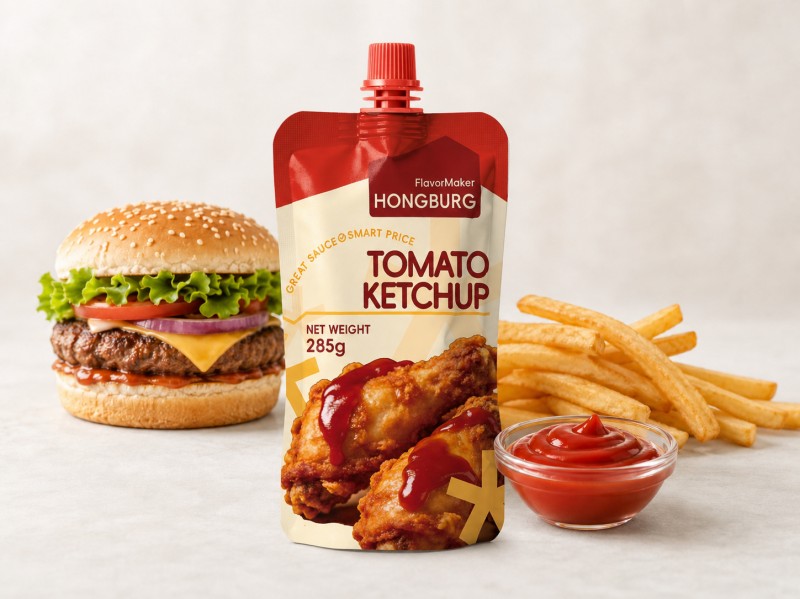
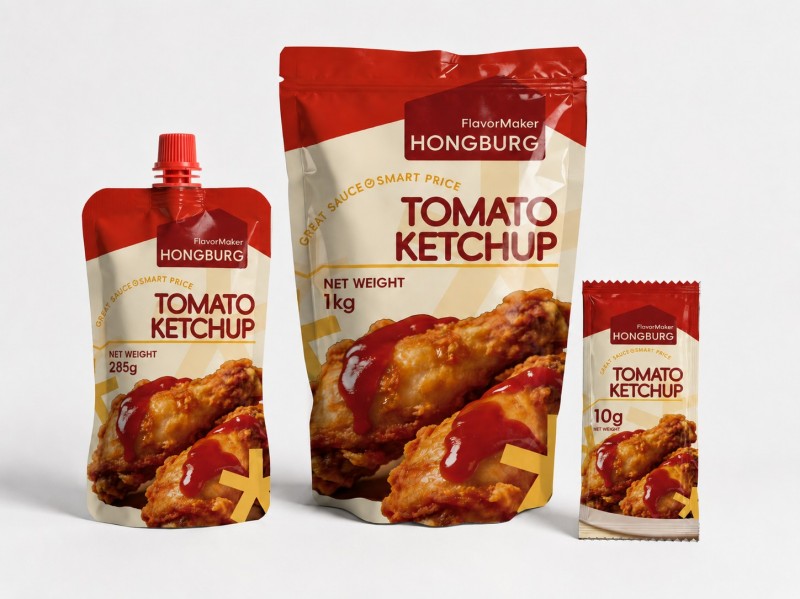
Hongburg supplies tomato ketchup in single-serve sachets for buyers who need portion-controlled condiment packs. For buyers planning a wider ketchup range, related pouch formats such as small pouch, stand-up pouch, spout pouch, flat pouch and soft pack can also be discussed based on retail, foodservice or distribution needs.
Sachet remains the primary focus for single-serving use, while other flexible pouch formats may support different channel strategies. A small pouch may be used for larger meal portions or family packs. A stand-up pouch can support retail display. A spout pouch may be suitable for easier dispensing. Flat pouch and soft pack formats can be considered for lightweight distribution or foodservice programs.
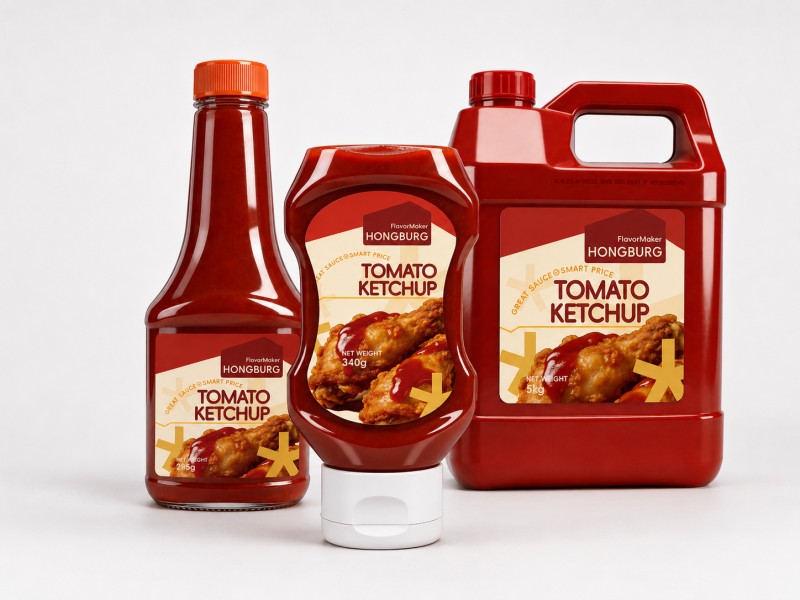
| Packaging Type | Included Formats | Net Weight Options |
| Pouch | Sachet / Small Pouch / Stand-up Pouch / Spout Pouch / Flat Pouch / Soft Pack | 10g / 15g / 20g / 250g / 500g / 800g / 1kg |
| Tetra Pak | Aseptic Carton / Carton Pack / Brick Carton / Shelf-stable Carton | 390g / 500g / 1kg |
| Glass Jar or Bottle | Glass Jar / Glass Bottle / Wide-mouth Jar / Retail Glass Packaging | 235g / 473g / 500g / 887g / 940g / 1.02kg |
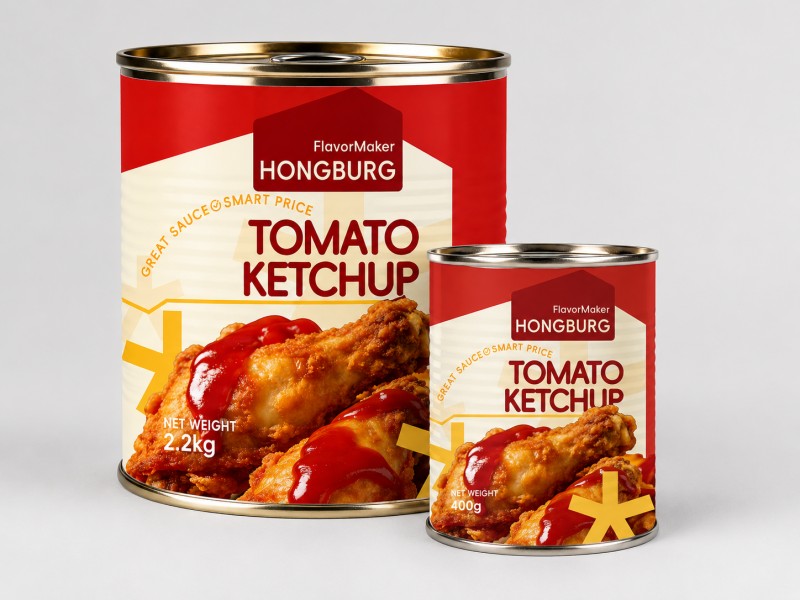
| Can | Tin Can / Metal Can / Food Can / Canned Format | 400g / 800g / 2.2kg / 3kg |
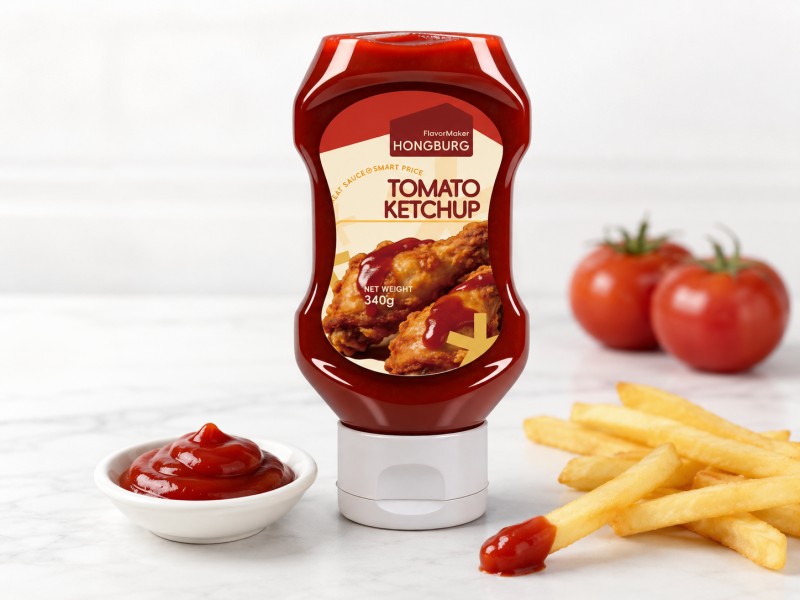
| Plastic Bottle or Bucket | Slim Plastic Bottle / Squeeze Bottle / Plastic Container / Plastic Jar / Plastic Bucket | 240g / 340g / 430g / 600g / 3kg / 3.75kg |
For ketchup sachet projects, buyers can discuss portion size, label language, private label artwork, outer carton requirements, sweetness, acidity, viscosity and tomato flavor direction. If the product is later developed for retail or larger foodservice use, packaging can be reviewed across pouch pack, squeeze bottle, glass bottle, can or plastic bucket formats.
Customization for Local Market and Foodservice Needs
Different markets do not always expect ketchup to taste the same. Some buyers may need a sweeter ketchup for quick-service restaurants, while others may prefer stronger acidity, a brighter tomato taste or a thicker dipping texture. These differences matter because ketchup is often served with familiar foods, and customers quickly notice changes in taste or texture.
Hongburg can discuss product direction according to the buyer’s target channel. A fast food supplier may focus on stable flavor and easy squeeze performance. A catering distributor may care more about portion size, carton packing and daily meal distribution. A private label buyer may need a sachet design that fits local language requirements, brand identity and market positioning.
Customization may include sweetness, acidity, saltiness, tomato flavor intensity, viscosity, color, sachet weight, label language and private label design. For buyers building a wider condiment program, the same ketchup direction can also be reviewed for small pouch, stand-up pouch, spout pouch, flat pouch or soft pack formats. This allows buyers to start with single-serve sachets and later expand into retail pouch packs or larger flexible packaging if their channel strategy changes.
Supporting Single-Serve Ketchup Programs
Hongburg supports buyers who need ketchup sachets for repeat foodservice use, private label projects and export distribution. In this type of project, the important question is not only whether ketchup can be packed in small portions. Buyers also need stable flavor, suitable viscosity, clear packaging communication and reliable supply for repeated use.
A fast food buyer may need sachets that match standard meal combinations. A distributor may need a ketchup portion pack that can be sold to different restaurant customers. A catering operator may need sachets that are easy to add to lunch boxes, event meals or institutional meal trays. A private label buyer may need local language artwork, barcode placement, carton packing and a consistent brand appearance.
Hongburg can discuss sachet weight, ketchup flavor direction, viscosity, packaging artwork and supply details before larger orders. Buyers can begin with sachets for portion-control service and later review squeeze bottles, slim plastic bottles, plastic buckets, glass bottles, cans, Tetra Pak or other formats when channel needs expand.
Quality & Supply Capability
For Tomato Ketchup in Sachet, quality control is closely connected to portion reliability, flavor consistency, viscosity, color and packaging suitability. Foodservice buyers usually need the product to perform consistently across many servings, cartons and repeat orders.
Hongburg supports export-oriented ketchup supply with OEM and private label cooperation. Product specification, sachet format, label language and packaging details can be discussed according to the buyer’s target market and channel plan. Samples are available for evaluation, with freight usually paid by the customer.
Relevant quality and supply references may include ISO22000, ISO9001, HACCP, FDA and HALAL. These certifications can support buyer review, while the final product specification should be confirmed through sample testing and project discussion.
FAQ — B2B Buyer Focus
Q1: Is Tomato Ketchup in Sachet suitable for fast food and takeaway service?
Yes. Sachet ketchup is suitable for fast food, takeaway meals, catering trays, meal kits, vending meals and institutional foodservice. It helps buyers control portions and distribute ketchup with less manual handling.
Q2: Can the sachet weight or portion size be customized?
Yes. Sachet weight can be discussed based on menu type, meal box format, customer habit and target channel. Buyers can review suitable portion sizes during sample evaluation or project discussion.
Q3: Can the sweetness, acidity and viscosity be adjusted?
Yes. Hongburg can discuss sweetness, acidity, tomato flavor intensity, viscosity, color and texture according to local market preference or buyer requirements.
Q4: Can Hongburg support private label ketchup sachets?
Yes. Private label design, label language and sachet artwork can be discussed. This is useful for distributors, foodservice brands, fast food suppliers and localized condiment programs.
Q5: Can buyers test samples before confirming bulk orders?
Yes. Samples are available for evaluation, with freight usually paid by the customer. Buyers can test flavor, viscosity, squeeze behavior, color and portion suitability before larger orders.
Q6: Can the same ketchup formula be supplied in other pouch formats later?
Yes. Buyers may start with single-serve sachets for portion control, then discuss small pouch, stand-up pouch, spout pouch, flat pouch or soft pack formats for retail, foodservice or distribution expansion. Other packaging families such as squeeze bottle, plastic bucket, glass bottle, can or Tetra Pak can also be reviewed based on channel needs.
Hot Tags: Tomato Ketchup in Sachet
Related Category
Send Inquiry
Please Feel free to give your inquiry in the form below. We will reply you in 24 hours.