- English
- Español
- Português
- русский
- Français
- 日本語
- Deutsch
- tiếng Việt
- Italiano
- Nederlands
- ภาษาไทย
- Polski
- 한국어
- Svenska
- magyar
- Malay
- বাংলা ভাষার
- Dansk
- Suomi
- हिन्दी
- Pilipino
- Türkçe
- Gaeilge
- العربية
- Indonesia
- Norsk
- تمل
- český
- ελληνικά
- український
- Javanese
- فارسی
- தமிழ்
- తెలుగు
- नेपाली
- Burmese
- български
- ລາວ
- Latine
- Қазақша
- Euskal
- Azərbaycan
- Slovenský jazyk
- Македонски
- Lietuvos
- Eesti Keel
- Română
- Slovenski
- मराठी
- Srpski језик

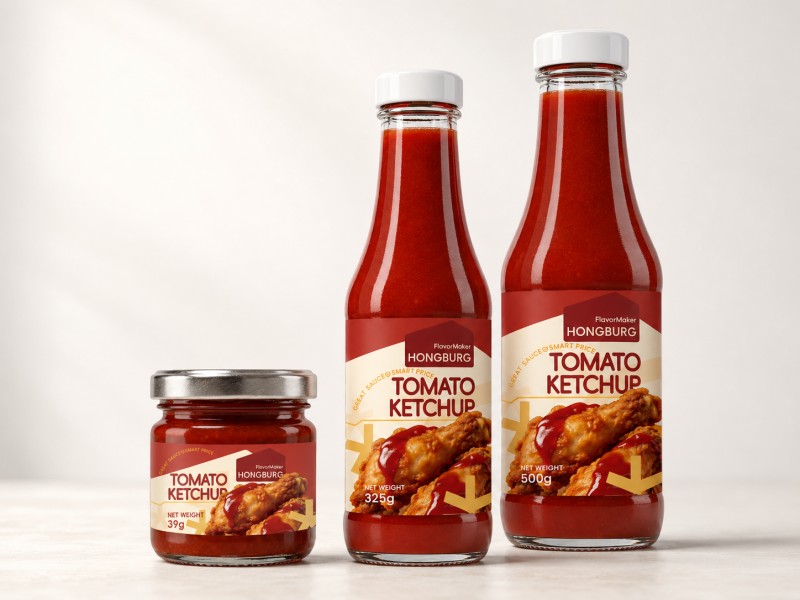
Tomato Ketchup in Glass Bottle
Hongburg factory's Tomato Ketchup in Glass Bottle is developed for bulk, wholesale, OEM and private label buyers who need retail-ready ketchup with visible product appearance, balanced tomato flavor and smooth table-use performance. The glass bottle format supports supermarket shelf presentation, household kitchen use, restaurant table service and private label brand positioning, while product taste, viscosity, color, label language and packaging details can be discussed based on target market needs.
Send Inquiry
Product Description
Retail-Ready Ketchup for Shelf Display and Table Use
Hongburg offers Tomato Ketchup in Glass Bottle for buyers who need a ketchup product that can work directly in retail, household and table-use channels. Glass bottle packaging gives the product a more visible presentation, allowing consumers and retail buyers to see the ketchup color, texture and overall product appearance more clearly before purchase.
For importers, distributors, supermarket suppliers and private label buyers, bottled tomato ketchup is often easier to position as a finished consumer product than a purely foodservice or bulk condiment. A glass bottle can support shelf display, brand identity and everyday kitchen use. It is also suitable for restaurants, cafés and table-service environments where ketchup is placed directly in front of consumers.
The value of glass bottle ketchup is not only the container itself. It is the combination of product appearance, label presentation, bottle size, flavor direction and usage convenience. Buyers choosing glass bottle packaging usually care about whether the ketchup looks appealing on shelf, pours well, matches consumer taste habits and fits their local retail or restaurant channel.
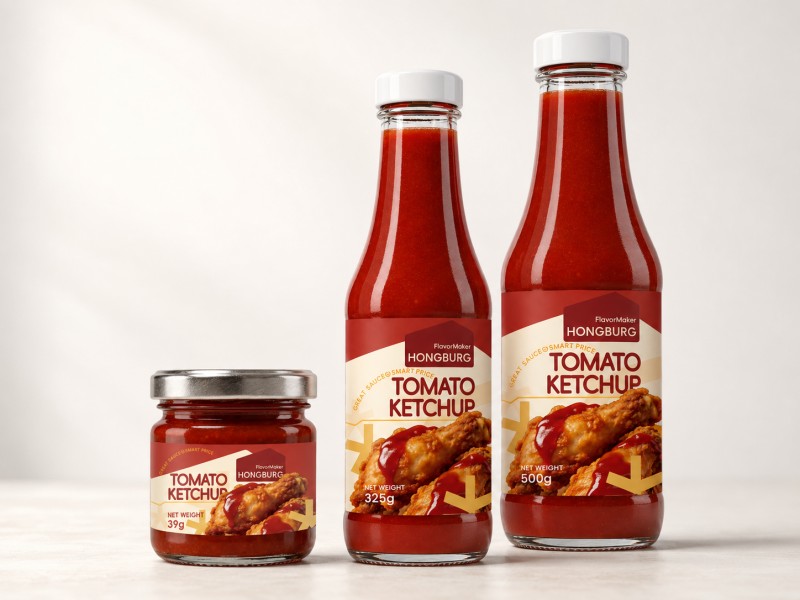
Product Information Snapshot
| Item | Description |
| Product Name | Tomato Ketchup in Glass Bottle |
| Product Category | Tomato Ketchup |
| Packaging Focus | Glass Bottle / Retail Glass Packaging |
| Main Use | Retail shelf, table service, household kitchen, restaurants |
| Buyer Fit | Importers, distributors, supermarket suppliers, private label buyers |
| Key Buyer Value | Visible product appearance, retail presentation, household use |
| Texture Direction | Smooth / pourable / dip-friendly |
| Flavor Direction | Balanced tomato flavor, sweetness and acidity |
| Customization Scope | Bottle size, label language, sweetness, acidity, viscosity, private label design |
| Supply Mode | Export supply / Bulk / Wholesale / OEM / Private Label |
| Sample Policy | Samples available, freight usually paid by customer |
| Certifications | ISO22000 / ISO9001 / HACCP / FDA / HALAL |
Why Glass Bottle Presentation Matters for Retail Buyers
For ketchup sold through supermarkets, grocery stores or local retail channels, packaging is part of the product decision. A glass bottle can help buyers present ketchup as a recognizable, consumer-facing condiment with a clear shelf identity. The visible ketchup color can support buyer confidence, while the label area gives space for brand communication, product information and private label design.
Consumers often judge ketchup by color, thickness and familiarity. When the ketchup is packed in a glass bottle, the deep red appearance and smooth body can become part of the product’s shelf appeal. This is especially useful for retail buyers who want the product to feel ready for home cooking, table use, snack pairing and everyday meals.
Glass bottle ketchup can be positioned for different retail styles. Some buyers may want a classic table-use ketchup bottle for family kitchens and restaurants. Others may prefer a cleaner private label look for supermarket shelves. The suitable direction depends on target consumer group, bottle size, label design, local taste preference and channel pricing strategy.
Household Kitchen and Restaurant Table Applications
Tomato ketchup in glass bottle packaging is suitable for repeated use in household kitchens, restaurants and table-service settings. Consumers can use it with fries, burgers, sandwiches, fried snacks, grilled foods, meat dishes, breakfast items and casual meals. Restaurants may use glass bottle ketchup for table placement, counter service or condiment stations, depending on their service model.
For household buyers, bottled ketchup needs to feel familiar and convenient. The product should pour smoothly, hold its texture and deliver a balanced tomato taste. For restaurant and café use, the bottle should support practical handling and consistent serving. Buyers may also care about how the bottle looks on the table, whether the label appears professional, and whether the ketchup color remains visually appealing.
This makes glass bottle ketchup different from sachet ketchup. Sachets are mainly about portion control and takeaway distribution, while glass bottle ketchup is more about shelf presentation, repeated use, table visibility and brand impression.
Flavor, Texture and Pouring Performance
A ketchup bottle should offer more than attractive packaging. The ketchup inside needs to match the way consumers use it. Buyers usually evaluate tomato ketchup by flavor balance, sweetness, acidity, color, viscosity and pouring behavior. If the ketchup is too thin, it may not feel suitable for dipping or table use. If it is too thick, it may not pour smoothly from the bottle.
Hongburg can discuss flavor direction based on local market expectations. Some markets prefer a sweeter ketchup for burgers and fries, while others may prefer stronger acidity or a more pronounced tomato flavor. For glass bottle ketchup, viscosity should be suitable for pouring, dipping and spreading. The product should work well in both home kitchens and restaurant table-service situations.
Sample evaluation can help buyers check color, flavor, texture, bottle compatibility and overall product presentation before bulk orders. This is useful for importers replacing an existing product, supermarket suppliers developing a new ketchup line, or private label buyers preparing a market-ready retail item.
Packaging Options & Custom Support
Hongburg supplies tomato ketchup in glass bottle packaging for buyers who need retail-ready presentation, visible product appearance and table-use convenience. Glass bottle remains the primary focus for this product, while related formats such as glass jar, retail glass packaging and wider-mouth glass containers can also be discussed according to market positioning.
For buyers planning multiple channel formats, the same ketchup direction may also be reviewed for sachet, small pouch, stand-up pouch, spout pouch, squeeze bottle, plastic bucket, can or Tetra Pak packaging. This helps buyers build a broader ketchup product range without limiting the project to one packaging format.
| Packaging Type | Included Formats | Net Weight Options |
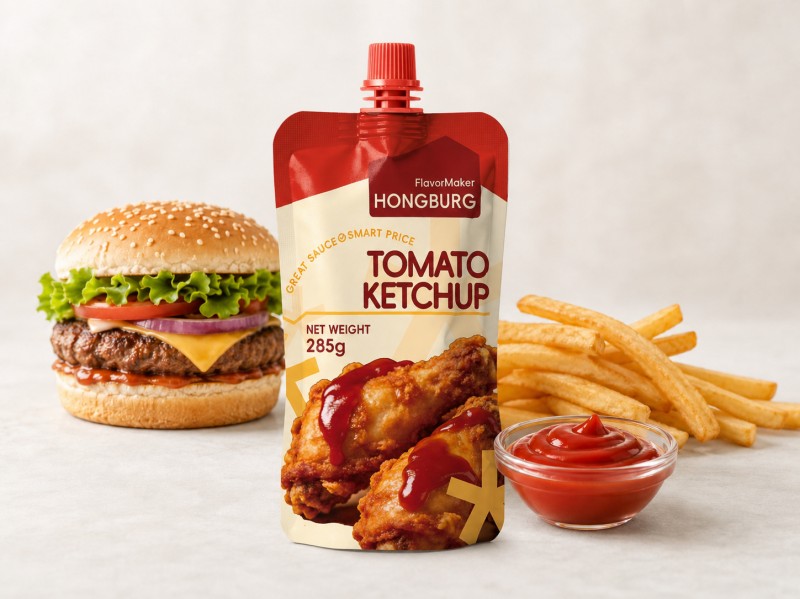
| Pouch | Sachet / Small Pouch / Stand-up Pouch / Spout Pouch / Flat Pouch / Soft Pack | 10g / 15g / 20g / 250g / 500g / 800g / 1kg |
| Tetra Pak | Aseptic Carton / Carton Pack / Brick Carton / Shelf-stable Carton | 390g / 500g / 1kg |
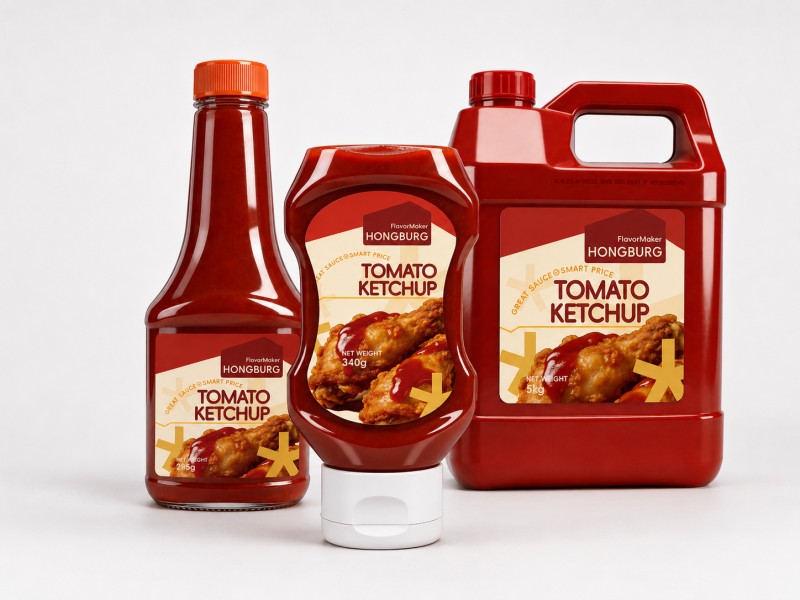
| Glass Jar or Bottle | Glass Jar / Glass Bottle / Wide-mouth Jar / Retail Glass Packaging | 235g / 473g / 500g / 887g / 940g / 1.02kg |
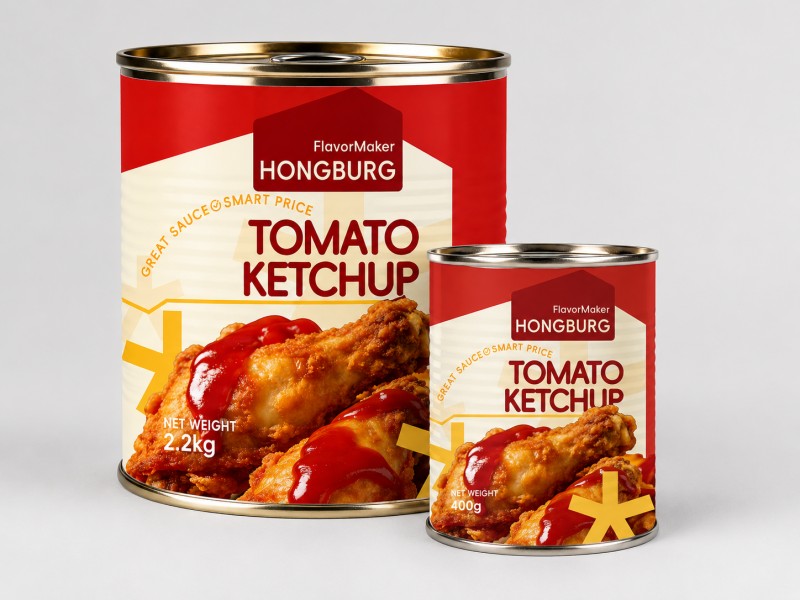
| Can | Tin Can / Metal Can / Food Can / Canned Format | 400g / 800g / 2.2kg / 3kg |
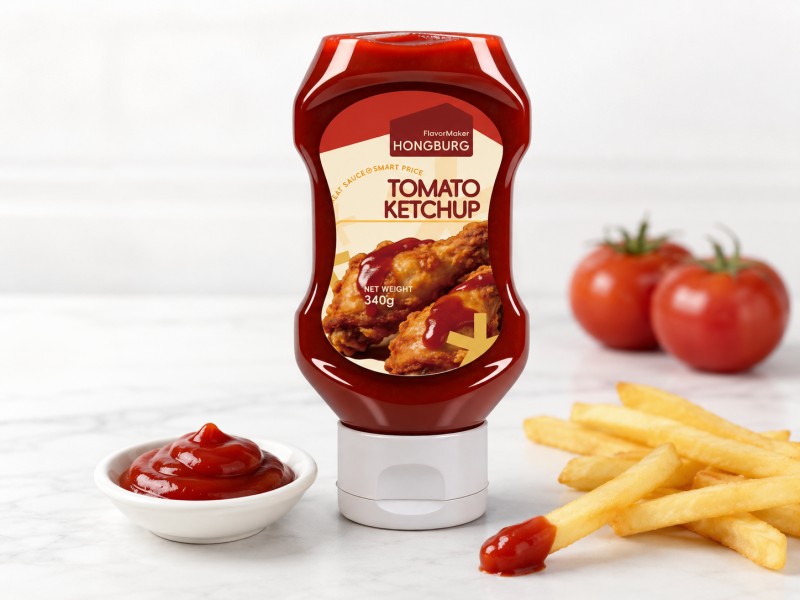
| Plastic Bottle or Bucket | Slim Plastic Bottle / Squeeze Bottle / Plastic Container / Plastic Jar / Plastic Bucket | 240g / 340g / 430g / 600g / 3kg / 3.75kg |
For glass bottle ketchup projects, buyers can discuss bottle size, label language, private label artwork, carton packing, sweetness, acidity, viscosity, color and tomato flavor direction. If the product is later developed for foodservice or convenience channels, packaging can also be reviewed across pouch pack, squeeze bottle, plastic container, tin can or other suitable formats.
Customization for Retail and Local Market Positioning
Different retail markets may expect different ketchup profiles. Some consumers prefer a sweeter tomato ketchup with a smooth and mild taste. Others may prefer a sharper acidity, stronger tomato flavor or thicker texture for dipping. For private label buyers, the product also needs to fit the brand’s price segment, shelf position and consumer habit.
Hongburg can discuss product customization according to the buyer’s target channel. A supermarket supplier may focus on label design, bottle size and shelf appearance. A restaurant distributor may care more about pouring performance, table use and repeat supply. A brand owner may need a specific taste direction to match an existing condiment range.
Customization may include sweetness, acidity, salt balance, tomato flavor intensity, viscosity, color, bottle size, label language and private label design. The goal is to help buyers develop a glass bottle ketchup product that fits the market, rather than simply placing standard ketchup into a glass container.
For buyers building a broader product line, the same ketchup formula direction can also be discussed for sachets, small pouches, spout pouches, squeeze bottles or plastic buckets. This allows the buyer to use glass bottle packaging for retail and table-use channels while preparing other formats for foodservice, takeaway or bulk distribution.
Supporting Retail Glass Bottle Ketchup Programs
Hongburg supports buyers developing ketchup products for retail shelves, restaurant tables and private label programs. In a glass bottle ketchup project, the key details usually include flavor direction, viscosity, color appearance, bottle size, label language and shelf positioning.
An importer may need a ketchup product that can be sold through local supermarkets. A distributor may need a bottle format suitable for restaurants and retail clients. A private label buyer may need a glass bottle ketchup with a clean label layout and consistent product appearance. Hongburg can help buyers review these details before larger orders.
This support is practical for buyers who want to evaluate both product and packaging. The ketchup should taste right, look right in the bottle, pour properly and match the intended sales channel. Buyers can begin with glass bottle packaging and later discuss other formats such as sachet, stand-up pouch, spout pouch, squeeze bottle, plastic bucket, can or Tetra Pak when channel expansion requires different packaging.
Quality & Supply Capability
For Tomato Ketchup in Glass Bottle, quality control is closely connected to taste consistency, viscosity, color, filling appearance and packaging suitability. Retail buyers need the product to look stable on shelf and perform consistently across repeat orders.
Hongburg supports export-oriented ketchup supply with OEM and private label cooperation. Product specification, bottle format, label language and packaging details can be discussed according to the buyer’s target market and channel plan. Samples are available for evaluation, with freight usually paid by the customer.
Relevant quality and supply references may include ISO22000, ISO9001, HACCP, FDA and HALAL. These certifications can support buyer review, while the final product direction should be confirmed through sample testing, packaging discussion and project communication.
FAQ — B2B Buyer Focus
Q1: Is Tomato Ketchup in Glass Bottle suitable for supermarket retail?
Yes. Glass bottle ketchup is suitable for supermarkets, grocery stores, private label retail products and household kitchen channels. The bottle format can support visible product presentation and shelf-ready brand positioning.
Q2: Can the ketchup color and texture be shown clearly through glass packaging?
Yes. Glass bottle packaging allows buyers and consumers to see the ketchup color and body more directly. This can help support retail presentation and product confidence.
Q3: Can bottle size, label language and private label design be customized?
Yes. Bottle size, label language, private label artwork, carton packing and product information can be discussed based on market and channel requirements.
Q4: Can sweetness, acidity and viscosity be adjusted for local markets?
Yes. Hongburg can discuss sweetness, acidity, tomato flavor intensity, viscosity, color and texture according to local taste preference or buyer requirements.
Q5: Can buyers test samples before confirming bulk orders?
Yes. Samples are available for evaluation, with freight usually paid by the customer. Buyers can test flavor, color, viscosity, pouring behavior and glass bottle presentation before larger orders.
Q6: Can the same ketchup formula be supplied in sachets, squeeze bottles or buckets later?
Yes. Buyers may start with glass bottle ketchup for retail or table use, then discuss sachets, small pouches, stand-up pouches, spout pouches, squeeze bottles, plastic buckets, cans or Tetra Pak formats for different channels.
Hot Tags: tomato ketchup in glass bottle, glass bottle tomato ketchup supplier, tomato ketchup oem
Related Category
Send Inquiry
Please Feel free to give your inquiry in the form below. We will reply you in 24 hours.