- English
- Español
- Português
- русский
- Français
- 日本語
- Deutsch
- tiếng Việt
- Italiano
- Nederlands
- ภาษาไทย
- Polski
- 한국어
- Svenska
- magyar
- Malay
- বাংলা ভাষার
- Dansk
- Suomi
- हिन्दी
- Pilipino
- Türkçe
- Gaeilge
- العربية
- Indonesia
- Norsk
- تمل
- český
- ελληνικά
- український
- Javanese
- فارسی
- தமிழ்
- తెలుగు
- नेपाली
- Burmese
- български
- ລາວ
- Latine
- Қазақша
- Euskal
- Azərbaycan
- Slovenský jazyk
- Македонски
- Lietuvos
- Eesti Keel
- Română
- Slovenski
- मराठी
- Srpski језик


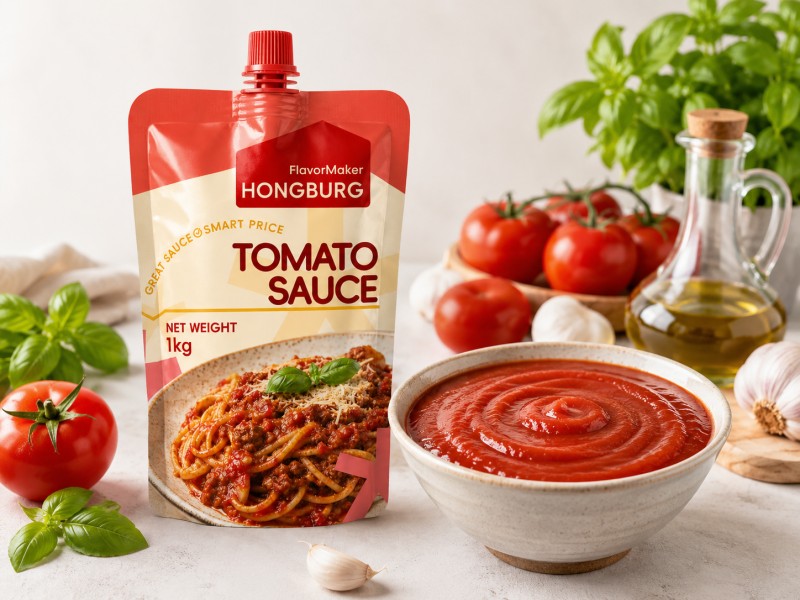
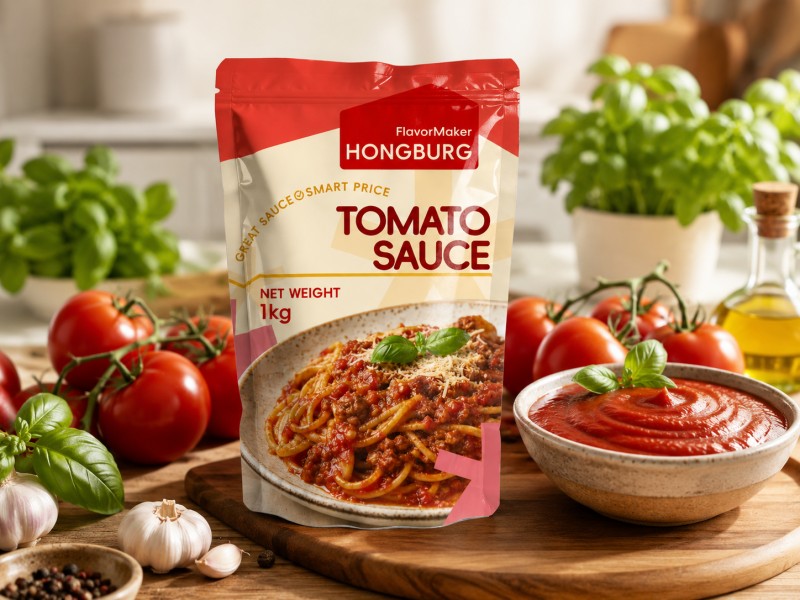
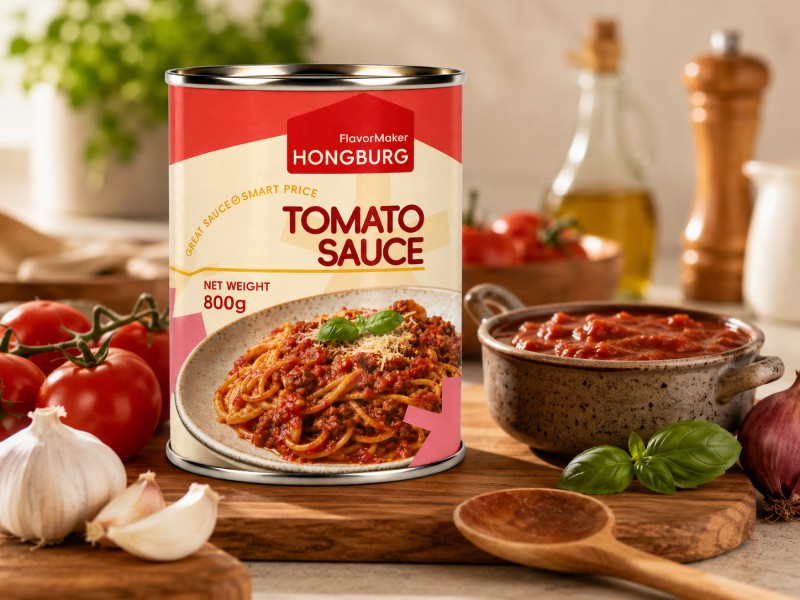
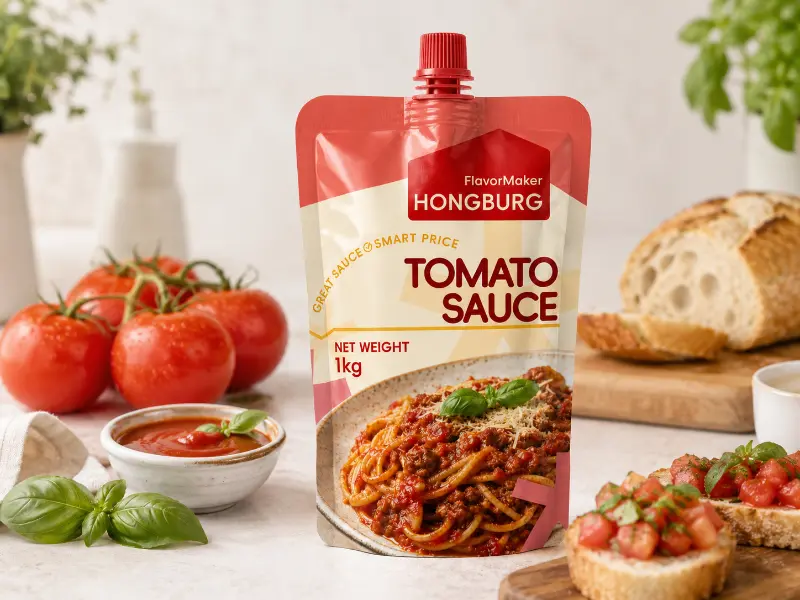
Tomato Sauce in Squeeze Bottle
Drive private label velocity with custom Tomato Sauce in Squeeze Bottle production from Hongburg. This multi-layer EVOH design blocks fluorescent photo-oxidation. Supermarket networks utilize our clean-label starch formulations for precise, drip-free consumer dispensing.
Send Inquiry
Product Description
Procurement logic for mass-market retail grocery channels demands an uncompromising balance of aesthetic longevity, consumer convenience, and logistics cost-efficiency. Hongburg’s fully automated squeeze bottle production line is calibrated to strictly meet these precise retail requirements, maximizing shelf-space ROI for supermarket planners.
Furthermore, the physical dimensions of these inverted bottles are engineered to seamlessly integrate with modern Shelf-Ready Packaging (SRP) display cartons. This logistical foresight allows supermarket staff to transfer products directly from the delivery pallet to the retail shelf in one motion, drastically reducing labor costs and minimizing stock-out windows during peak shopping hours.
1.Base Material Core: Selected high-yield, non-GMO tomato derivatives.
2.Packaging Architecture: Multi-layer co-extruded plastic incorporating a protective EVOH barrier.
3.Dispensing Mechanism: Ergonomic inverted cap integrated with a clean-cut, anti-drip silicone cross-slit valve.
4.Target Channels: High-velocity grocery networks across South America, the CIS, and rapidly expanding African retail sectors.

Private Label Processing Pipeline & Fluid Engineering
The transition from raw commodity to a finished, shelf-ready retail SKU is executed within our 22,000 square-meter Industry 4.0 automation hub. To ensure absolute batch consistency, the manufacturing protocol is defined by five sequential engineering phases:
1.Brix Calibration & Dynamic Rheology: Digital refractometers and continuous in-line viscometers are utilized to balance the soluble solids (Brix) and fluid thickness dynamically. This ensures the recipe aligns precisely with target regional taste profiles and maintains a pumpable consistency throughout the entire filling shift.
2.Structural High-Pressure Homogenization: The tomato cell matrices are subjected to immense mechanical shear within industrial homogenizers. This physical alignment permanently binds the water and tomato solids, drastically reducing the syneresis rate (water separation) so consumers don't squeeze out a layer of clear liquid before the sauce.
3.Barrier Blow-Molding & Photo-Oxidation Defense: The packaging is blow-molded to embed the EVOH sleeve. Unlike standard single-layer PET/PE plastics, this advanced multi-layer structure is engineered to actively block UV fluorescent light and oxygen penetration, decisively halting Lycopene browning on well-lit 24/7 supermarket shelves.
4.Yield Stress Valve Mechanics: The silicone cross-slit valve installed in the cap operates on strict rheological principles. The sauce is formulated to possess a specific yield stress—meaning it requires intentional squeezing pressure to break the surface tension. Once the consumer releases the bottle, the pressure drops, and the valve snaps shut instantly, severing the fluid stream to prevent messy crusting around the nozzle.
5.In-Line X-Ray & Metal Verification: Prior to final case packing, every single bottle passes through automated X-ray scanners and metal detectors, ensuring absolute food safety compliance required by multinational retail conglomerates.
Analytical Control Metrics
| Technical Parameter | Industrial Specification Limit | Methodology |
| Brix Profile (%) | Market-Specific Calibration Thresholds | Digital Refractometry |
| Silicone Valve Actuation | Tested for precise drip-free interruption | Automated Pneumatic Press |
| Drop-Impact Resilience | Evaluated for rough retail shelf handling | Vertical Free-Fall Tester |
| Syneresis Rate | Monitored for minimal fluid bleed/separation | Centrifugal Separation |
| In-line Viscosity Check | Maintained within calibrated flow curves | Continuous Process Rheometer |
QA Director Briefing (FAQ)
Can we achieve a "Clean-Label" profile without controversial artificial thickening E-numbers?
Yes. The fluid dynamic structure is primarily supported by high-pressure physical homogenization. Upon client request, we integrate clean-label, thermally-stable modified starches. This technological approach allows private labels to maintain thick, luxurious consistencies while legally removing synthetic additive declarations (E-numbers) from the consumer ingredient panel.
How is the supply chain insulated against sudden agricultural tomato crop shortages?
Operating a massive continuous production footprint, Hongburg executes centralized, forward-contracting for bulk tomato paste inputs. This structural hedging protects volume buyers from sudden spot-market pricing volatility, enabling your retail purchasing team to plan quarterly supermarket promotions with highly accurate profit margin forecasting.
Is the facility credentialed for strict Islamic and Southeast Asian markets?
Absolutely. The continuous production system is validated by ISO, HACCP, and stringent Halal certifications. Furthermore, our technical dossier framework is meticulously optimized to support localized customs registrations, including the rigorous BPOM material evaluations strictly mandated for deploying stock into emerging Asian retail networks.
Hot Tags: Tomato Sauce in Squeeze Bottle
Related Category
Send Inquiry
Please Feel free to give your inquiry in the form below. We will reply you in 24 hours.