
- English
- Español
- Português
- русский
- Français
- 日本語
- Deutsch
- tiếng Việt
- Italiano
- Nederlands
- ภาษาไทย
- Polski
- 한국어
- Svenska
- magyar
- Malay
- বাংলা ভাষার
- Dansk
- Suomi
- हिन्दी
- Pilipino
- Türkçe
- Gaeilge
- العربية
- Indonesia
- Norsk
- تمل
- český
- ελληνικά
- український
- Javanese
- فارسی
- தமிழ்
- తెలుగు
- नेपाली
- Burmese
- български
- ລາວ
- Latine
- Қазақша
- Euskal
- Azərbaycan
- Slovenský jazyk
- Македонски
- Lietuvos
- Eesti Keel
- Română
- Slovenski
- मराठी
- Srpski језик

Sauce Import Checklist: Packaging, Labels and Export Support
Sauce Import Checklist: Packaging, Labels and Export Support
Importing sauce products involves more than selecting a supplier and comparing quotations.
Before commercial production begins, food importers need to confirm product specifications, samples, packaging formats, label information, customization requirements, export support and shipment arrangements. Missing information at any stage may lead to repeated revisions, production delays or products that do not match the target market.
This sauce import checklist helps importers organize the main requirements of an OEM, private label or bulk sauce sourcing project.
Why Importers Need a Sauce Import Checklist
Importers often coordinate several parties during an international food sourcing project, including the manufacturer, packaging suppliers, logistics providers, local distributors and compliance service providers.
Their main concerns typically include:
- Quality consistency
- Packaging suitability
- Export documentation
- Supply reliability
- Communication efficiency
- Product adaptation
- Production and shipment coordination
A structured checklist helps the importer and manufacturer identify missing information before it affects production. It also creates a clearer approval process for formulas, samples, packaging and labels.
1. Define the Product and Target Application
The first step is to define the required product category and how the product will be used.
Possible sauce categories include:
- Mayonnaise
- Cheese sauce
- Tomato ketchup
- Tomato sauce
- Tomato paste
- Pizza sauce
- Pasta sauce
- BBQ sauce
- Burger sauce
- Mustard sauce
- Salad dressing
- Custard sauce
Different applications may require different product characteristics.
A sauce intended for retail shelves may require convenient packaging and clear product positioning. A foodservice sauce may need consistent application performance and larger packaging. A sauce used as a food manufacturing ingredient may require stable technical performance.
Before requesting a quotation or sample, importers should prepare:
- Product category
- Target market
- Intended application
- Sales channel
- Preferred flavor profile
- Required texture
- Packaging format
- Estimated quantity
- Private label requirements
A clear product brief allows the manufacturer to recommend a more suitable starting product.
2. Confirm the Product Specification
A product name alone is not enough to define a sauce.
Two products in the same category may differ in flavor, sweetness, acidity, salt level, texture or viscosity. Importers should identify the characteristics that are important for their market.
Depending on the product, the specification may cover:
- Flavor profile
- Sweetness
- Salt level
- Acidity
- Fat level
- Texture
- Viscosity
- Color
Hongburg supports adjustments to formulas, flavor profiles, texture and viscosity according to product and application requirements.
Importers should also confirm whether they need:
- An existing manufacturer formula
- A market-specific formula
- A product based on a reference sample
- A customized product for a private label project
Specific instructions are more useful than general requests such as “better flavor” or “higher quality.”
3. Request and Evaluate Samples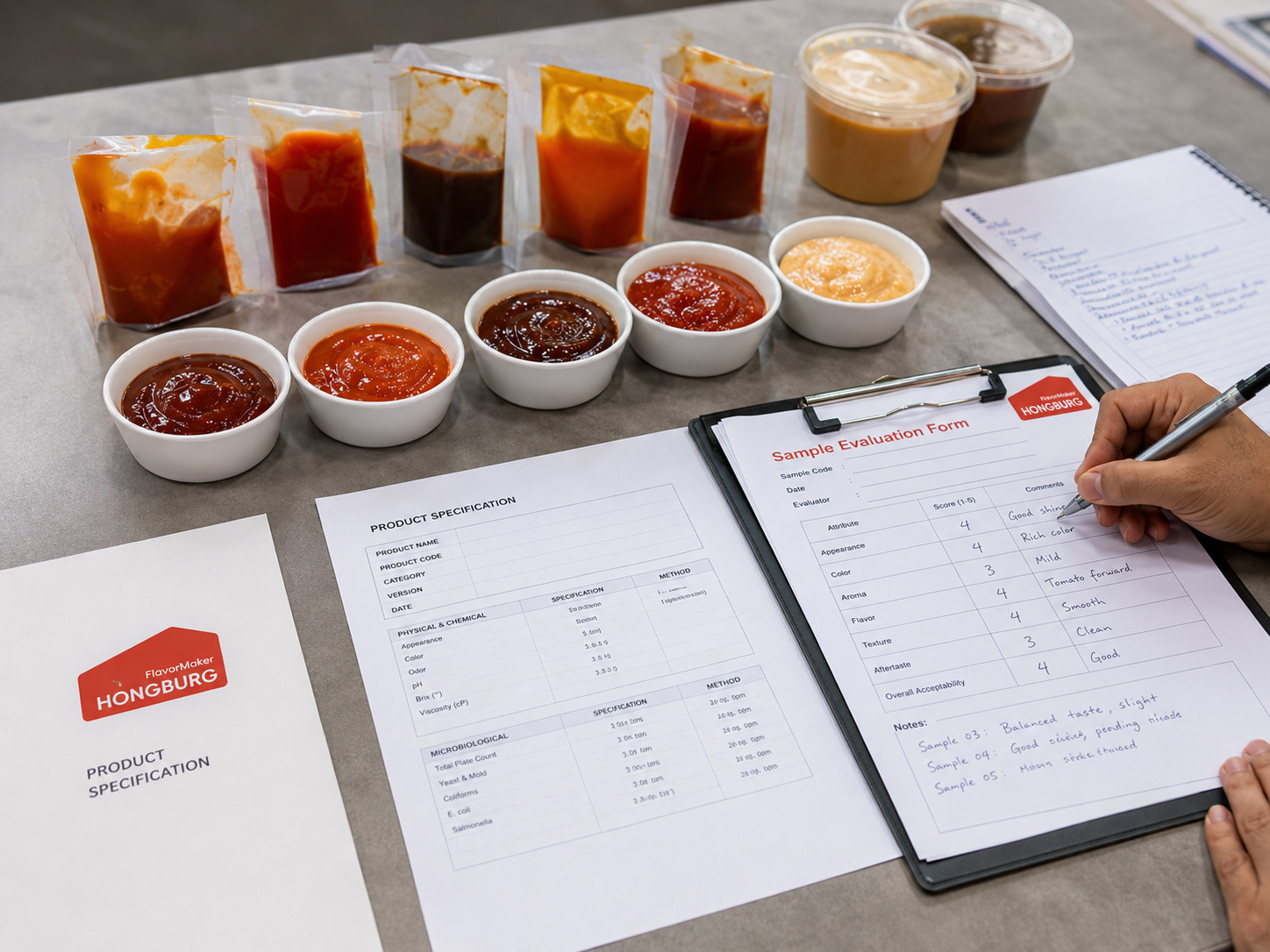
Samples should be evaluated before commercial production.
The importer should test the sample according to its intended application rather than relying only on direct tasting.
Important evaluation areas include:
- Flavor
- Aroma
- Color
- Texture
- Viscosity
- Acidity
- Mouthfeel
- Application performance
- Packaging compatibility
For example, mayonnaise intended for burgers should be tested in the finished burger. Cheese sauce for nachos should be evaluated for flavor, texture and handling in the actual serving application.
Importers should provide structured sample feedback, such as:
- Increase or reduce sweetness
- Adjust the salt level
- Increase viscosity
- Reduce acidity
- Modify flavor intensity
- Improve performance in the target application
The approved sample or agreed product specification should become the reference for production.
4. Select the Packaging Format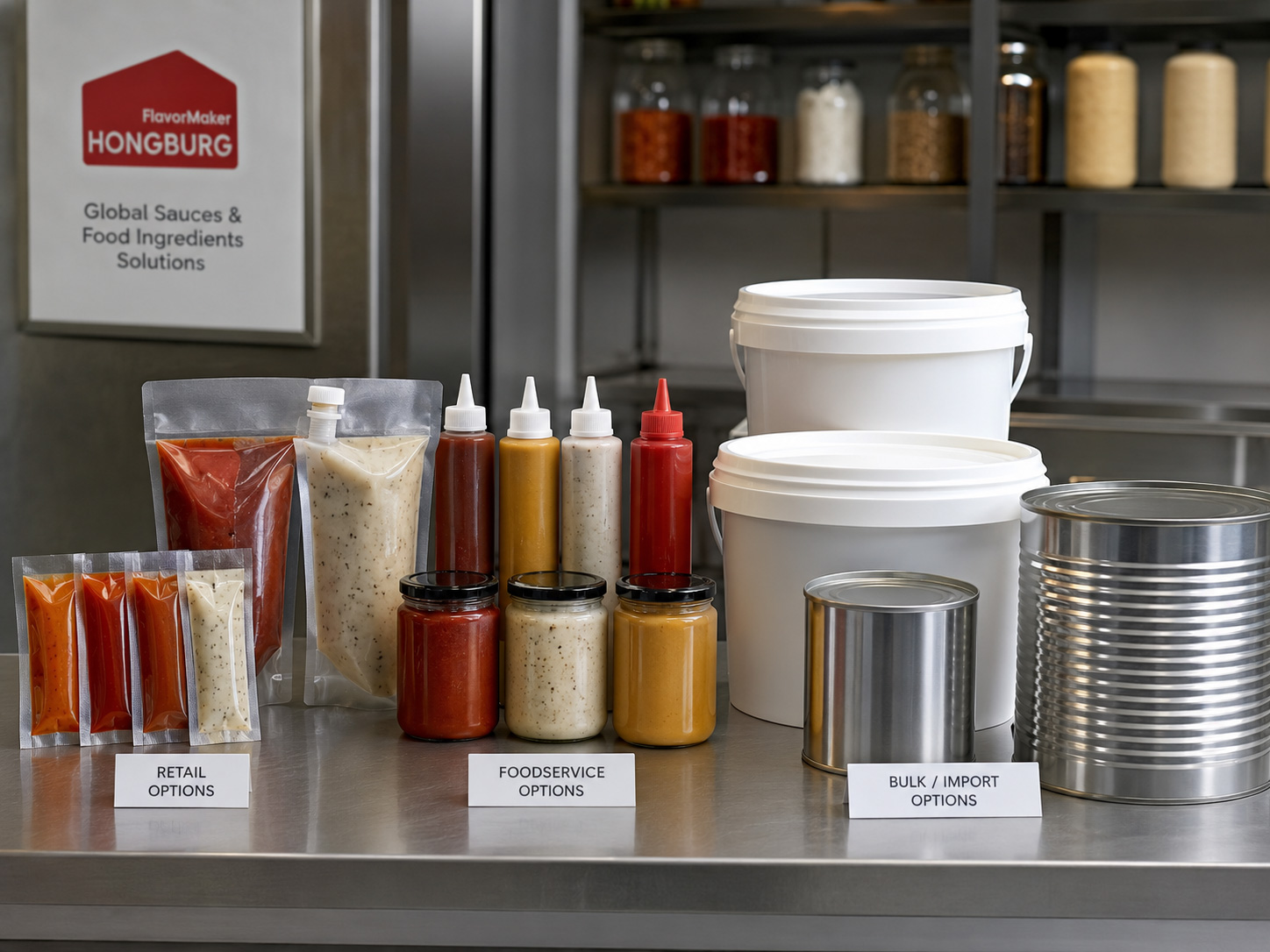
Packaging affects product protection, transportation, storage, handling and market presentation.
Hongburg supports five main packaging families:
- Pouch
- Tetra Pak
- Glass
- Can
- Plastic
Available formats include sachets, stand-up pouches, spout pouches, flat pouches, aseptic cartons, glass jars, glass bottles, cans, squeeze bottles, plastic bottles and buckets.
Retail Packaging
Retail projects may use:
- Squeeze bottles
- Plastic bottles
- Glass bottles
- Glass jars
- Small pouches
- Sachets
Importers should consider:
- Shelf presentation
- Consumer convenience
- Label area
- Product positioning
- Local storage conditions
Foodservice Packaging
Foodservice projects may use:
- Buckets
- Large pouches
- Spout pouches
- Other bulk formats
Important considerations include:
- Kitchen handling
- Storage efficiency
- Portion control
- Ease of use
- Product performance after opening
Packaging Information to Confirm
Importers should confirm:
- Packaging format
- Packaging size
- Packaging material
- Retail or foodservice application
- Customer label requirements
- Custom printing requirements
- Transportation suitability
Packaging should be confirmed before final commercial arrangements because the selected format may affect order conditions and project scheduling.
5. Prepare Private Label Information
Private label projects require coordination between the buyer, manufacturer and packaging parties.
Information may include:
- Brand name
- Product name
- Label language
- Packaging artwork
- Market-specific information
- Storage information
- Usage information
- Customer contact details
Label requirements vary by destination market and product category. Importers should confirm applicable requirements with their local compliance specialists and provide finalized information to the manufacturer.
Hongburg supports customer labels, language coordination and market-specific private label projects.
Label Approval Checklist
Before production, confirm:
- Brand name
- Product name
- Required language
- Label dimensions
- Label position
- Packaging artwork
- Final file version
- Buyer approval
A clear version-control process helps prevent outdated artwork from entering production.
6. Define the Customization Scope
Customization may involve the sauce formula, packaging or both.
Formula Customization
Possible adjustment areas include:
- Flavor
- Sweetness
- Salt level
- Acidity
- Fat level
- Texture
- Viscosity
- Color
Packaging Customization
Possible requirements include:
- Packaging format
- Packaging size
- Custom labels
- Printed packaging
- Language requirements
- Market-specific presentation
Importers should distinguish between essential requirements and optional preferences.
This helps the manufacturer identify a practical solution and explain which requests may affect sampling, packaging preparation or production scheduling.
7. Discuss MOQ and SKU Planning
MOQ should be discussed together with the formula, packaging format and customization level.
Possible influencing factors include:
- Product category
- Formula customization
- Packaging size
- Packaging materials
- Printed packaging
- Customer label requirements
- Number of SKUs
- Production scheduling
Importers entering a new market may benefit from starting with a focused product range.
A smaller initial portfolio can make it easier to:
- Test market demand
- Manage inventory
- Control packaging complexity
- Collect buyer feedback
- Plan repeat orders
The importer should provide realistic quantity estimates and request commercial conditions for each product and packaging combination.
8. Review Quality Management Information
Quality consistency is a major concern for food importers.
Before placing an order, buyers should understand how the manufacturer manages:
- Raw materials
- Production processes
- Finished products
- Batch information
- Packaging inspection
- Documentation
Hongburg’s listed certifications and systems include:
- ISO 22000
- ISO 9001
- HACCP
- HALAL
- FDA Registration
The relevance of each certification should be evaluated according to the product, destination market and buyer requirements.
Importers may ask:
- How are raw materials inspected?
- How is production monitored?
- How are finished products inspected?
- How is batch consistency managed?
- Which quality documents are available?
- Are additional buyer specifications required?
Certifications are one part of supplier evaluation. Buyers should also understand how quality procedures are applied during production.
9. Confirm Export Support and Documents
Export document requirements may differ according to the destination market, product category and shipment arrangement.
Before production begins, the importer should provide a list of required documents.
The buyer and manufacturer should confirm:
- Documents required by the destination market
- Documents available from the manufacturer
- Information provided by the importer
- Additional review requirements
- Final document confirmation timing
Hongburg supports export documentation, label coordination, packaging coordination, production scheduling and shipment communication.
Importers should not assume that the same document set applies to every market or product.
10. Confirm the Production Schedule
Production should be scheduled after the main product and packaging information has been approved.
Before scheduling, confirm:
- Product specification
- Sample approval
- Packaging format
- Packaging size
- Label artwork
- Order quantity
- SKU structure
- Required documents
Changes after production planning may affect the schedule.
Importers should avoid confirming production while essential information remains incomplete.
11. Plan Shipment Communication
Clear shipment communication helps the importer, manufacturer and logistics provider work from the same information.
Before shipment, confirm:
- Buyer contact
- Logistics contact
- Shipping instructions
- Packaging quantity
- Document information
- Communication responsibilities
- Timing of shipment updates
A shared order summary can help reduce misunderstandings during shipment preparation.
12. Complete a Final Pre-Production Review
Product
- Product category confirmed
- Formula or sample approved
- Product specification confirmed
- Application confirmed
Packaging
- Packaging format confirmed
- Packaging size confirmed
- Packaging material confirmed
- Sales channel confirmed
Label
- Artwork approved
- Language confirmed
- Final version confirmed
- Dimensions and position confirmed
Commercial Information
- Order quantity confirmed
- SKU structure confirmed
- Customization scope confirmed
- Production arrangement confirmed
Export Coordination
- Document requirements confirmed
- Buyer and manufacturer responsibilities confirmed
- Shipment communication process confirmed
This review helps identify inconsistencies before they affect commercial production.
Common Mistakes When Importing Sauce Products
Providing an Unclear Product Brief
A general inquiry without target market, application or packaging information makes accurate product selection difficult.
Testing Flavor Without Testing the Application
A product may perform differently when used in burgers, sandwiches, pizza, bakery products or commercial kitchens.
Confirming Packaging Too Late
Late packaging changes may affect labels, commercial arrangements and production scheduling.
Using Unapproved Artwork
The importer should ensure that the final approved label file is used for production.
Assuming Every Market Requires the Same Documents
Import and documentation requirements should be reviewed for each destination market and product.
Launching Too Many SKUs Initially
A complex first order may increase inventory, packaging and coordination requirements.
Sauce Import Checklist
| Project Area | Items to Confirm |
|---|---|
| Product | Product category, target market, application and sales channel |
| Specification | Flavor, texture, viscosity, acidity, color and other requirements |
| Sample | Testing method, buyer feedback and final approval |
| Packaging | Format, size, material and intended application |
| Label | Brand, language, artwork, dimensions and approved version |
| Customization | Formula, packaging and private label requirements |
| MOQ | Quantity by product, packaging format and SKU |
| Quality | Quality systems, inspection and buyer specifications |
| Documents | Destination-market and project requirements |
| Scheduling | Product approval, packaging approval and production plan |
| Shipment | Logistics contacts, instructions and communication process |
How Hongburg Supports Importers
Hongburg Flavormaker Food Co., Ltd. is an export-focused food manufacturer specializing in sauces, condiments, tomato-based products and selected canned food products.
Hongburg supports global importers through:
- Product selection
- Formula adjustment
- Application testing
- OEM manufacturing
- Private label production
- Packaging selection
- Label coordination
- Export documentation
- Production scheduling
- Shipment communication
The company’s product categories include mayonnaise, cheese sauce, tomato-based sauces, cooking sauces, BBQ and specialty sauces, dressings, custard sauce and selected canned products.
Hongburg is positioned as a practical sauce manufacturing partner for global buyers.
Conclusion
A successful sauce import project begins with clear and complete information.
Importers should confirm product specifications, samples, packaging, labels, customization requirements, export documents and shipment responsibilities before commercial production.
Using a structured sauce import checklist helps buyers reduce avoidable revisions and communicate more efficiently with the manufacturer.
Importers planning an OEM, private label or bulk sauce project can contact Hongburg Flavormaker with their product category, target market, packaging format, expected quantity and customization requirements.
FAQ
What information should importers provide when requesting a sauce quotation?
Importers should provide the product category, target market, intended application, packaging format, expected quantity and customization requirements.
Should sauce samples be tested in the final application?
Yes. Samples should be tested in their intended use, such as burgers, sandwiches, fries, pizza, bakery products or food manufacturing.
What packaging options are available for sauce products?
Options may include sachets, pouches, cartons, jars, bottles, cans and foodservice buckets.
Can sauce formulas be customized?
Possible adjustments include flavor, sweetness, salt level, acidity, fat level, texture, viscosity and color.
When should private label artwork be prepared?
Artwork preparation should begin early and must be finalized before commercial production.
Are export document requirements the same for every market?
No. Requirements may vary according to the destination market, product and shipment arrangement.
What factors can affect the MOQ?
Product formula, packaging size, packaging materials, printing requirements, label requirements and the number of SKUs may influence project conditions.
How does Hongburg support international importers?
Hongburg supports product development, OEM and private label production, packaging selection, label coordination, export documentation, production scheduling and shipment communication.
Send Inquiry
