
- English
- Español
- Português
- русский
- Français
- 日本語
- Deutsch
- tiếng Việt
- Italiano
- Nederlands
- ภาษาไทย
- Polski
- 한국어
- Svenska
- magyar
- Malay
- বাংলা ভাষার
- Dansk
- Suomi
- हिन्दी
- Pilipino
- Türkçe
- Gaeilge
- العربية
- Indonesia
- Norsk
- تمل
- český
- ελληνικά
- український
- Javanese
- فارسی
- தமிழ்
- తెలుగు
- नेपाली
- Burmese
- български
- ລາວ
- Latine
- Қазақша
- Euskal
- Azərbaycan
- Slovenský jazyk
- Македонски
- Lietuvos
- Eesti Keel
- Română
- Slovenski
- मराठी
- Srpski језик

From Ingredient-Type Sauces to Table Condiments: How Importers Identify Sauce Categories and Sourcing Uses
From Ingredient-Type Sauces to Table Condiments: How Importers Identify Sauce Categories and Sourcing Uses
A buyer may receive quotations for tomato paste, tomato sauce, ketchup, mayonnaise and cheese sauce from the same supplier. On paper, they all belong to the wider sauce and condiment business. In practice, they do not follow the same sourcing logic.
Some sauces work more like ingredients. Some are cooking bases. Some are finished table condiments. Others are developed for foodservice kitchens, retail shelves or private label projects. If an importer treats all of them as the same type of product, the purchasing discussion can quickly become unclear.
For importers and distributors, sauce category classification should begin with one question:
How will the product be used after import?
The answer affects specification, packaging, labeling, price comparison, supplier selection and even the way the product is sold in the local market.
1. Why Sauce Category Boundaries Matter to Importers
Many importers start by asking for a sauce price list. That is understandable, but it is rarely enough.
A concentrated tomato paste for cooking, a retail ketchup in a squeeze bottle and a mayonnaise for foodservice kitchens may all be packed in cartons and shipped in containers. But the buyer should not evaluate them with the same checklist.
Tomato paste may require attention to Brix, color, acidity and cooking performance. Ketchup may require a finished flavor profile, suitable sweetness, squeeze performance and retail packaging. Mayonnaise may require texture control, emulsion stability and application testing.
When these products are mixed together without clear category boundaries, several problems can appear:
- the buyer compares prices without comparing specifications;
- the packaging format does not match the sales channel;
- the product name is understood differently by supplier and buyer;
- private label development becomes slower because the formula direction is unclear;
- the importer builds a product range with overlapping or confusing roles.
Category classification is not only a marketing issue. It is a purchasing tool.
2. Ingredient-Type Sauces: Products Used as Bases or Inputs
Ingredient-type sauces are usually not consumed directly as table condiments. They are used for cooking, blending, further processing or food manufacturing.
Tomato paste is the most typical example. It is concentrated, thick and usually selected for its tomato solids, color, flavor intensity and cooking performance. A buyer sourcing tomato paste should not only ask whether the product is “good quality.” The more useful questions are more specific:
What Brix is required?
Will the product be used for retail cooking or food manufacturing?
Does the market prefer cans, pouches or aseptic cartons?
Will the product be diluted or blended into another sauce?
A tomato paste that works well for household cooking may not be the best choice for industrial sauce production. The same product category can serve different buyers, but the sourcing purpose must be clear before price comparison.
Other sauce bases can follow a similar logic. Certain tomato-based products, concentrated pastes or prepared bases may be used by restaurants, central kitchens or food manufacturers to create final menu items or finished products.
For importers, ingredient-type sauces should be evaluated through specification and application first, then packaging and price.
3. Cooking Sauces: Between Ingredient and Finished Product
Cooking sauces sit between ingredient-type products and finished condiments. They are usually more prepared than tomato paste, but they may still be used as part of a cooking process.
Tomato sauce, pizza sauce and pasta sauce often fall into this middle area. They may already contain seasoning, herbs, salt, sugar, oil or other formula adjustments depending on the market and application.
This is where naming can become confusing. In one market, “tomato sauce” may mean a cooking base. In another market, it may be close to ketchup. In some foodservice channels, the term may refer to a ready-to-use sauce for pizza, pasta or prepared meals.
That is why importers should define cooking sauces by usage, not only by product name.
A pizza sauce buyer may focus on spreadability, tomato flavor, herb profile and baking performance. A pasta sauce buyer may care more about ready-to-use flavor, texture, visible ingredients and consumer positioning. A food manufacturer may need batch consistency and compatibility with other ingredients.
The same tomato base can move in different commercial directions depending on how it is formulated and packed.
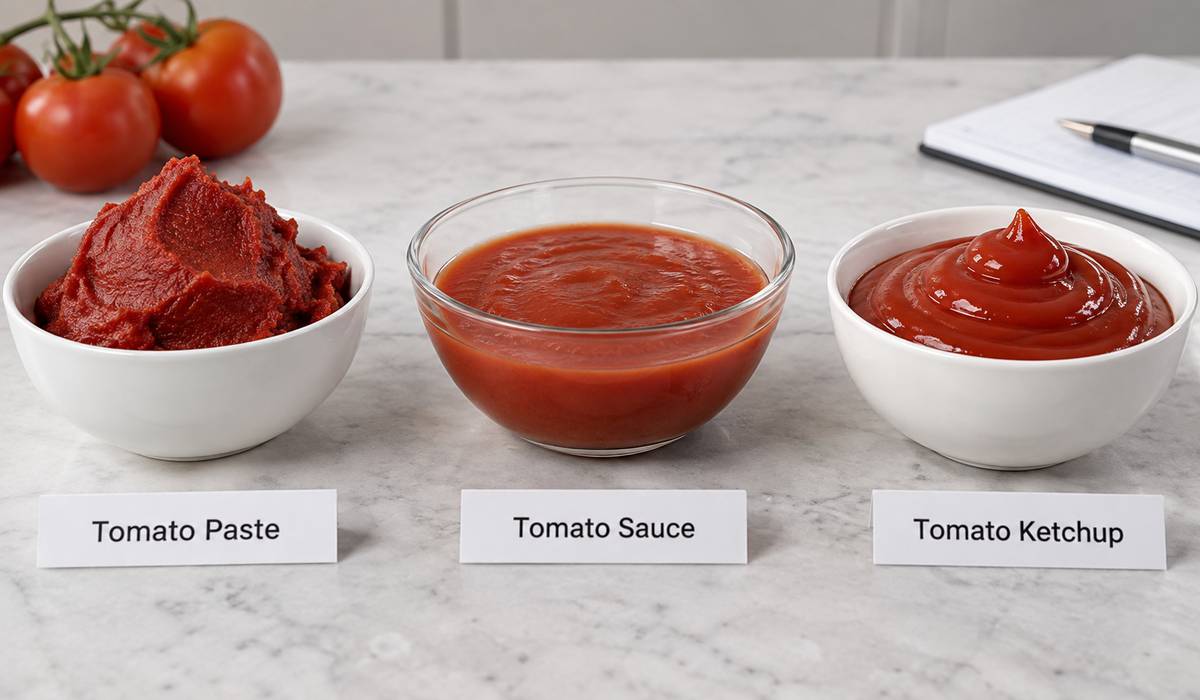
4. Table Condiments: Ready-to-Use Products for Direct Consumption
Table condiments are finished products designed for direct use. Tomato ketchup, mayonnaise, BBQ sauce, mustard, salad dressing and burger sauce usually belong closer to this category.
For these products, the buyer is not only purchasing a formula. The buyer is purchasing a usage experience.
Take tomato ketchup as an example. It needs a recognizable flavor balance, suitable sweetness and acidity, stable color and good dispensing performance. A retail ketchup may need attractive bottle shape and label space. A foodservice ketchup may need sachets, larger pouches or easy-to-use squeeze formats.
Mayonnaise follows a different technical logic. It is usually an emulsified sauce, so the buyer must pay attention to texture, oil level, mouthfeel, emulsion stability and application performance. A mayonnaise used in sandwiches may need spreadability. A mayonnaise used in salads may need coating performance. A mayonnaise used in foodservice may need stable handling during daily kitchen operation.
For importers, table condiments should be evaluated through finished taste, packaging experience, consumer acceptance and channel suitability.
This is different from ingredient-type sourcing. With tomato paste, the buyer may focus on concentration and cooking use. With ketchup or mayonnaise, the buyer must also consider how the final user opens, squeezes, spreads, dips or serves the product.
5. How Packaging Changes the Category Logic
Packaging is one of the easiest ways to understand the role of a sauce product.
A can of tomato paste usually suggests cooking, storage and concentration. A squeeze bottle of ketchup suggests direct use. A bucket of mayonnaise suggests foodservice consumption. A small sachet suggests takeaway or portion control.
The product itself and the packaging format should support the same commercial purpose.
For retail channels, packaging often needs to be shelf-ready, easy to recognize and suitable for consumer handling. For foodservice channels, packaging should support kitchen efficiency, storage, portion control and product turnover. For industrial buyers, packaging may need to support bulk handling, production planning and cost control.
This is why importers should not choose packaging only by copying another market. A format that works in one channel may create problems in another.
A glass jar may help a retail mayonnaise look more familiar or premium in some markets, but it may not be practical for a high-volume restaurant buyer. Sachets may work well for takeaway ketchup, but they may not be the right choice for tomato paste used in cooking. A pouch may reduce handling cost in foodservice, but only if the user has a suitable dispensing or storage process.
The most suitable packaging depends mainly on sales channel, usage rate, storage condition and user behavior.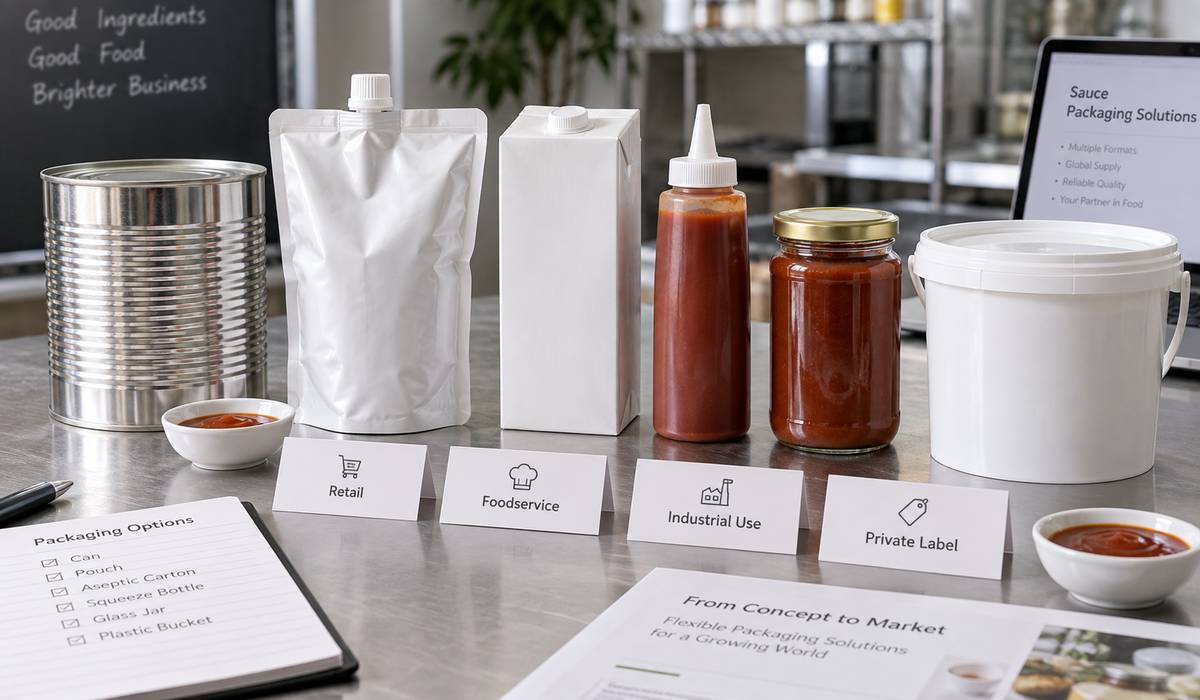
6. A Practical Classification Method for Importers
For daily sourcing work, importers can classify sauce products with a simple four-level logic.
| Category Logic | Typical Products | Main Use | Buyer Focus |
|---|---|---|---|
| Ingredient-Type | Tomato paste, concentrated tomato products | Cooking, blending, manufacturing | Brix, color, viscosity, acidity, specification |
| Cooking Sauce | Tomato sauce, pizza sauce, pasta sauce | Cooking or semi-ready use | Formula, seasoning, application, pack format |
| Table Condiment | Ketchup, mayonnaise, BBQ sauce, mustard | Direct use, dipping, spreading, serving | Taste, texture, dispensing, retail or foodservice fit |
| Customized Sauce | Private label sauce, flavored mayonnaise, burger sauce | Brand or channel-specific use | Formula customization, packaging, label support |
This classification is not meant to replace legal product definitions or local labeling rules. It is a practical sourcing framework. It helps buyers ask better questions before requesting samples or comparing prices.
For example, an importer sourcing tomato paste should not use the same evaluation method as an importer developing a private label mayonnaise line. One project may depend more on concentration and packing efficiency. The other may depend more on formula stability, mouthfeel, label positioning and application testing.
The clearer the category logic, the easier the supplier communication becomes.
7. Why Private Label Projects Need Clear Category Planning
Private label projects make category planning more important because the buyer is not only importing a product. The buyer is building a market-facing item under their own brand.
A private label tomato paste project may focus on Brix, net weight, can size, pouch option or carton loading. A private label ketchup project may focus on sweetness, acidity, bottle shape, label design and family-size positioning. A private label mayonnaise project may require formula adjustment, texture control, fat level selection and stability checks.
The same importer may source all of these products, but the development path should not be identical.
A common mistake is to start with packaging design before the product role is clear. Another mistake is to request “similar quality” without defining the target application. In B2B sourcing, “similar” can mean different things: similar taste, similar texture, similar cost level, similar shelf positioning or similar production specification.
For a private label sauce project, category planning should come before final packaging design. The importer should first define where the product will be sold, who will use it, how it will be consumed and what the buyer expects the product to do.
8. How Hongburg Supports Sauce Category Sourcing
Hongburg Flavormaker supplies sauces and condiments for global B2B buyers, including tomato-based products, ketchup, mayonnaise, cheese sauce, salad dressing, BBQ sauce, burger sauce, mustard and related sauce categories.
For importers, distributors and private label buyers, Hongburg can support different product directions according to category logic. Ingredient-type products may require attention to specification, packaging and cooking application. Finished condiments may require flavor adjustment, texture control, retail packaging and foodservice usability.
This category-based approach is useful when a buyer wants to build a complete sauce portfolio. Instead of treating all products as “sauces,” the buyer can separate cooking bases, ready-to-use condiments and customized sauce products. Each product then has a clearer role in the local market.
Hongburg’s value is not only providing product options. For B2B buyers, the more useful support is helping match product type, packaging format and sourcing purpose before production decisions are finalized.
For buyers developing a private label sauce range or comparing a long-term sauce supplier, this early classification can reduce later changes in formula, packaging and labeling.
Conclusion
Sauce categories should not be understood only by product names. For importers, the more practical question is how each product will be used after import.
Tomato paste is closer to an ingredient-type product. Tomato sauce, pizza sauce and pasta sauce often work as cooking sauces. Ketchup, mayonnaise, BBQ sauce and salad dressing are closer to table condiments or ready-to-use sauces. Private label sauce projects may cross several categories, but they still need clear sourcing logic.
When importers classify sauces by application, packaging and channel, supplier communication becomes more efficient and product selection becomes more accurate.
FAQ
1. What is the difference between ingredient-type sauces and table condiments?
Ingredient-type sauces are usually used for cooking, blending or food manufacturing. Table condiments are finished products used directly by consumers or foodservice operators, such as ketchup, mayonnaise, BBQ sauce or mustard.
2. Is tomato paste a sauce or an ingredient?
For B2B sourcing, tomato paste is often closer to an ingredient or cooking base because it is concentrated and commonly used for cooking, dilution, blending or food manufacturing.
3. Why can tomato sauce be confusing for importers?
The meaning of tomato sauce can vary by market. It may refer to a cooking base, a ready-to-use sauce or a product that overlaps with condiment language. Importers should define the intended application before confirming formula and packaging.
4. How should importers classify mayonnaise?
Mayonnaise should usually be treated as an emulsified condiment. Buyers should evaluate texture, oil level, emulsion stability, mouthfeel, packaging and application performance.
5. Why is packaging important when classifying sauce categories?
Packaging often reflects the product’s commercial role. Cans may fit concentrated tomato paste, squeeze bottles may fit ketchup, buckets may fit foodservice mayonnaise and sachets may fit takeaway condiments.
6. What should private label buyers confirm before starting a sauce project?
Private label buyers should confirm the target channel, product role, formula direction, packaging format, label requirements, MOQ expectations and quality standards before comparing prices.
Send Inquiry
