- English
- Español
- Português
- русский
- Français
- 日本語
- Deutsch
- tiếng Việt
- Italiano
- Nederlands
- ภาษาไทย
- Polski
- 한국어
- Svenska
- magyar
- Malay
- বাংলা ভাষার
- Dansk
- Suomi
- हिन्दी
- Pilipino
- Türkçe
- Gaeilge
- العربية
- Indonesia
- Norsk
- تمل
- český
- ελληνικά
- український
- Javanese
- فارسی
- தமிழ்
- తెలుగు
- नेपाली
- Burmese
- български
- ລາວ
- Latine
- Қазақша
- Euskal
- Azərbaycan
- Slovenský jazyk
- Македонски
- Lietuvos
- Eesti Keel
- Română
- Slovenski
- मराठी
- Srpski језик

Home > Products > Dressings and Condiments > Salad Dressing > Classic Salad Dressing with Balanced Flavor
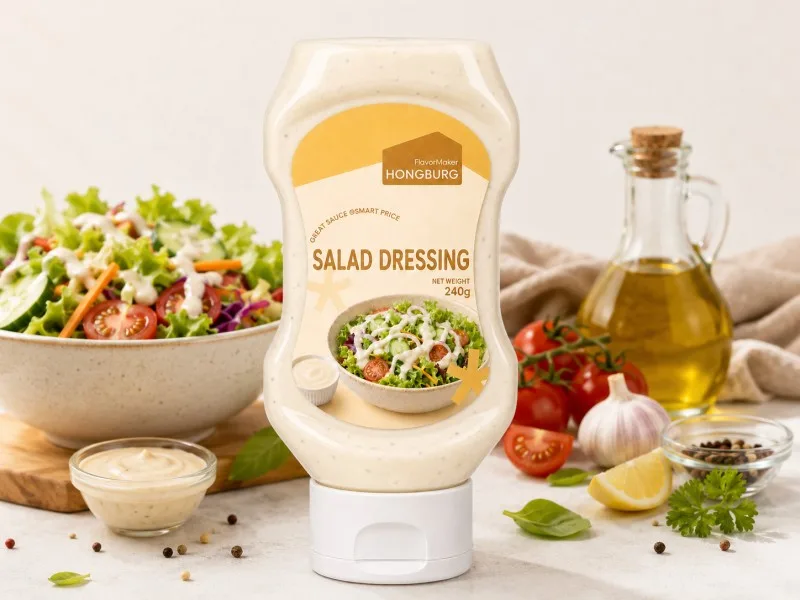
Classic Salad Dressing with Balanced Flavor
Purchase quality Classic Salad Dressing with Balanced Flavor for salads, vegetables, wraps, sandwiches, burgers, meal bowls and light meals from leading China manufacturer Hongburg. With customizable acidity, sweetness, saltiness, creaminess, viscosity, color, packaging and label language, it supports foodservice, retail, distributor and private label salad dressing programs.
Send Inquiry
Product Description
Classic Balanced Salad Dressing for Salads, Wraps and Light Meals
Hongburg factory offers Classic Salad Dressing with Balanced Flavor for buyers who need a practical salad dressing product with broad application value. Unlike mayonnaise, which is often used mainly as a creamy spread or base sauce, this product is positioned as a dressing-style sauce for salads, vegetables, light meals and everyday food applications. It is also different from specific flavored dressings such as ranch, Caesar, Thousand Island or Italian herb dressing, because its main value is balanced taste and flexible use.
For salad bars, light meal brands and foodservice kitchens, a classic salad dressing needs to work with different ingredients. It should pair well with green salads, vegetable salads, chicken salads, wraps, sandwiches, burgers, meal bowls and simple prepared foods. The flavor should not be too sharp, too sweet or too heavy. Instead, it should help bring the ingredients together and make the finished dish easier to enjoy.
For supermarket suppliers and private label buyers, Classic Salad Dressing with Balanced Flavor can serve as a core dressing SKU. Consumers can understand it easily, and it can be positioned as an everyday dressing option for home salads, vegetables, sandwiches and light meals.
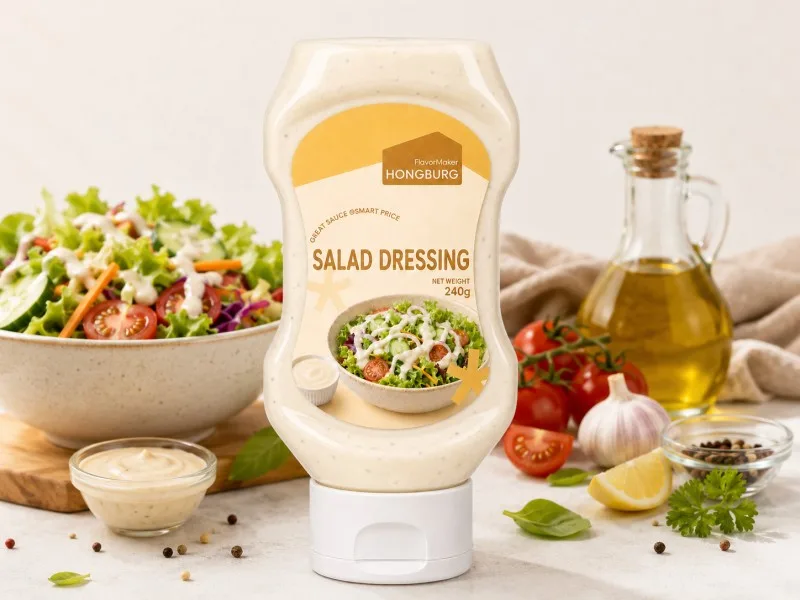
Product Information Snapshot
|
Item |
Description |
|
Product Name |
Classic Salad Dressing with Balanced Flavor |
|
Product Category |
Salad Dressing |
|
Flavor Focus |
Classic balanced salad dressing flavor |
|
Texture Focus |
Smooth / Pourable / Dressing-friendly / Spreadable |
|
Main Use |
Salad dressing, vegetable topping, sandwich spread, wrap sauce, dipping, light meal pairing |
|
Buyer Fit |
Importers, distributors, salad bar suppliers, restaurant suppliers, supermarket suppliers, private label buyers |
|
Key Buyer Value |
Balanced taste, broad salad and light meal compatibility, core dressing SKU |
|
Application Fit |
Green salads, vegetable salads, chicken salads, wraps, sandwiches, burgers, meal bowls |
|
Customization Scope |
Acidity, sweetness, saltiness, creaminess, viscosity, color, texture, packaging, label language, private label design |
|
Packaging Support |
Pouch / Tetra Pak / Glass Jar or Bottle / Can / Plastic Bottle or Bucket |
|
Supply Mode |
Export supply / Bulk / Wholesale / OEM / Private Label |
|
Sample Policy |
Samples available, freight usually paid by customer |
|
Certifications |
ISO22000 / ISO9001 / HACCP / FDA / HALAL |
Balanced Flavor for Everyday Salad and Light Meal Use
A classic salad dressing should not depend on one strong flavor direction. For B2B buyers, the key value is balance. Acidity should make the dressing feel fresh, but not too sharp. Sweetness can improve acceptability, but should not dominate the product. Saltiness should support the overall flavor, while creaminess and texture should help the dressing coat vegetables and other ingredients properly.
This balanced flavor profile makes the product useful across different food applications. For green salads and vegetable salads, the dressing can bring smoothness and light seasoning. For chicken salads or meal bowls, it can help connect protein, vegetables, grains and toppings. For wraps and sandwiches, it can work as a spread-style sauce that adds moisture and flavor without making the product feel too heavy.
For foodservice kitchens, a balanced salad dressing can reduce preparation complexity and help maintain consistent taste across repeated use. For retail consumers, it can become a convenient everyday dressing for home meals. For private label buyers, it can be used as a base SKU before expanding into ranch dressing, Caesar dressing, Thousand Island dressing, Italian herb dressing or honey mustard sauce.
Texture and Dressing Performance Adapted to Market Needs
Different markets may expect different salad dressing profiles. Some buyers may prefer a lighter dressing with clearer acidity and a cleaner finish. Others may need a smoother, slightly sweeter and creamier product for broader consumer acceptance. Some foodservice users may care more about pourability and coating behavior, while retail buyers may focus on appearance, viscosity and shelf communication.
Hongburg can discuss acidity, sweetness, saltiness, creaminess, viscosity, color, smoothness and overall texture according to buyer requirements. For salad applications, the dressing should coat ingredients evenly without becoming watery. For sandwiches and wraps, it should be spreadable enough to stay in place. For dipping or topping use, buyers may prefer a slightly thicker sauce body.
Sample testing can help buyers evaluate flavor balance, acidity, sweetness, viscosity, color, dressing behavior, spreading performance, dipping performance and packaging suitability before confirming bulk orders. This is especially useful for buyers developing a new private label salad dressing or adjusting an existing product for a different market.
Packaging Options & Custom Support
Hongburg supports multiple packaging formats for Classic Salad Dressing with Balanced Flavor, allowing buyers to match the product with foodservice, retail, takeaway, wholesale or private label programs. Packaging should be selected according to how the dressing will be sold, stored and used.
Sachet and small pouch formats can support takeaway salads, fast food portion packs and single-serve dressing applications. Stand-up pouch, spout pouch, flat pouch and soft pack formats may support flexible packaging, refill use, retail extensions or distributor supply. Squeeze bottle and slim plastic bottle options can support easy dispensing for salad bars, light meal shops, fast food counters, household kitchens and restaurant use. Glass jar, wide-mouth jar and glass bottle formats are suitable for retail shelf presentation and table use. Tin can, metal can and food can formats may serve wholesale, foodservice kitchens or food processing. Tetra Pak, aseptic carton, carton pack or brick carton formats can support carton-based distribution, while plastic bucket or plastic container formats may be suitable for larger foodservice operations.
|
Packaging Type |
Included Formats |
Net Weight Options |
|
Pouch |
Sachet / Small Pouch / Stand-up Pouch / Spout Pouch / Flat Pouch / Soft Pack |
10g / 15g / 20g / 250g / 500g / 800g / 1kg |
|
Tetra Pak |
Aseptic Carton / Carton Pack / Brick Carton / Shelf-stable Carton |
390g / 500g / 1kg |
|
Glass Jar or Bottle |
Glass Jar / Glass Bottle / Wide-mouth Jar / Retail Glass Packaging |
235g / 473g / 500g / 887g / 940g / 1.02kg |
|
Can |
Tin Can / Metal Can / Food Can / Canned Format |
400g / 800g / 2.2kg / 3kg |
|
Plastic Bottle or Bucket |
Slim Plastic Bottle / Squeeze Bottle / Plastic Container / Plastic Jar / Plastic Bucket |
240g / 340g / 430g / 600g / 3kg / 3.75kg |
For salad dressing projects, buyers can discuss packaging size, label language, private label artwork, carton packing, acidity, sweetness, saltiness, creaminess, viscosity, color and texture direction. The final packaging plan should match the buyer’s retail, salad bar, restaurant, distributor or foodservice strategy.
Customization for Salad Dressing Applications
Classic Salad Dressing with Balanced Flavor can be adapted for different channels and market expectations. A salad bar supplier may need a dressing that pours smoothly and coats vegetables evenly. A light meal brand may need a dressing that works across salads, wraps and meal bowls. A restaurant supplier may need a versatile dressing for chicken salads, sandwiches, burgers and side dishes. A supermarket supplier may need a retail-ready product with clear classic salad dressing positioning.
Hongburg can support discussions around acidity, sweetness, saltiness, creaminess, viscosity, smoothness and color. For green salads, buyers may prefer a lighter and cleaner taste. For chicken salads and meal bowls, a slightly creamier texture may help connect ingredients better. For sandwiches and wraps, spreadability and flavor balance are important. For retail family use, a mild and familiar profile may be more suitable.
Private label buyers can also customize packaging format, label language and artwork to fit retail, foodservice or distributor positioning. This allows Classic Salad Dressing with Balanced Flavor to work as a core dressing SKU, while leaving room for future line extension into ranch dressing, Caesar dressing, Thousand Island dressing, Italian herb dressing, honey mustard sauce or other specialty dressings.
Supporting Classic Salad Dressing Programs
Hongburg supports buyers developing salad dressing products for salad bars, light meal brands, restaurant supply, retail shelves, distributors and private label programs. In this type of project, the key is to match flavor balance, texture, packaging format and target channel.
A salad bar supplier may need a dressing that performs well for daily vegetable preparation. A restaurant supplier may need a dressing that works with salads, sandwiches and light meals. A supermarket supplier may need a retail product with clear positioning and broad consumer acceptance. A distributor may need a flexible dressing SKU that can serve different customer groups.
Hongburg can help buyers review flavor direction, acidity, sweetness, viscosity, color, packaging format and sample performance before larger orders. Buyers can start with Classic Salad Dressing with Balanced Flavor as a base SKU, then expand into ranch, Caesar, Thousand Island, Italian herb, sesame, creamy garlic or other salad dressing products according to channel needs.
Quality and Supply Capability
For Classic Salad Dressing with Balanced Flavor, quality control is closely related to flavor consistency, acidity balance, viscosity, color, texture and packaging suitability. Buyers using salad dressing in retail, foodservice or private label channels usually need stable taste and sauce performance across repeat orders.
Hongburg supports export-oriented salad dressing supply with OEM and private label cooperation. Product specification, packaging format, label language and carton requirements can be discussed according to the buyer’s target market. Samples are available for evaluation, with freight usually paid by the customer.
Relevant quality and supply references may include ISO22000, ISO9001, HACCP, FDA and HALAL. Final product specifications should be confirmed through sample testing and project discussion.
Hot Tags: Classic Salad Dressing with Balanced Flavor
Related Category
Send Inquiry
Please Feel free to give your inquiry in the form below. We will reply you in 24 hours.